


Thuja Hedging Plants
Thuja occidentalis Brabant, White Cedar Hedge
Thuja Hedging Plants, more specifically Thuja Brabant or White Cedar Hedges are a great choice for a fast growing evergreen conifer hedge. Thuja Brabant are evergreen conifers widely used in Europe for creating a hedge in preference to Green Leylandii. There are similarities between Thuja and Leylandii but in general Thuja Brabant Hedging is bushier and slightly slower growing making it easier to maintain as a hedge. Thuja Hedging Plants can be kept as a formal hedge from 5 feet upwards. Thuja hedges will tolerate harder pruning than a leylandii hedge and will often regrow quite well when cut back hard into older wood. The foliage of a thuja hedge is mid to dark green and has a wonderful almost fruity aroma to it, when trimmed or after it has rained. This long lived native American tree was once used extensively by the indigenous people who depended on the tree for their basic materials. Naturally a large tree, Thuja can be used effectively as a hedge, and is also perfect for screening. A Thuja hedge is easy to grow and is tolerant of most conditions. Thuja Hedging can be kept at any height and width if trimmed annually. An excellent choice for a faster-growing formal hedge or tall screen.
We grow and sell a range of sizes of Thuja Brabant Hedging Plants here in the nursery. We have 3 sizes of Thuja Brabant in a 10 Litre pot. For more immediate impact, we also grow our Instant Thuja Hedges in 90 Litre troughs. The Instant hedges are grown in lines as a hedge on the nursery. The beauty of the instant hedges is that all you need to do is dig a trench and put them in and you have a pre-grown hedge. The instant hedges come in 1 metre lengths but do require 2 strong people to lift them.
Conifer Hedging
Are you looking for a nursery to provide you with conifer hedges? Here at Hedging UK, we are very experienced when it comes to growing the best quality hedging plants – conifer hedging plants and Thuja hedges, and have been supplying them across the UK for many years. The conifer hedges we grow are hedges that are made up of evergreen conifer trees, like Thuja such as White cedar and western red cedar, cypress such as leylandii and Taxus / Yew hedges. These trees have dense foliage and are ideal for creating privacy screens and windbreaks in gardens and landscapes. The most common conifer species used for hedges include Leyland cypress, arborvitae, and yew.
Conifer hedges have a number of benefits, including their year-round greenery, low maintenance requirements, and ability to provide shelter and habitat for wildlife. They can also be trimmed and shaped to create a wide range of formal and informal designs, making them a versatile option for gardeners and landscapers. They have been known to reduce noise pollution between garden spaces and in the immediate vicinity, as well as provide colourful foliage to provide visual appeal. For further information on conifer hedges, check out Hedging UK today.
Looking for a New Conifer Hedge?
Are you looking for conifer hedges or Thuja hedging? Make sure that you choose Hedging UK. When it comes to growing conifer hedges, it can be a great way to create a natural and attractive privacy screen or windbreak in your garden or landscape, this is due to their ability to grow quickly to the commonly desired hedge height of 8 foot and over. When it comes to planting a hedge, the best time of year to do this is generally in the Autumn. This gives the plants the most time to develop new root before the warmer weather the following Summer.
Different conifer species have different growth habits, foliage colours, textures, and pruning requirements, so it’s important to choose a species that is most suited to your requirements, soil type, and desired ultimate height and width of the hedge. Common conifers planted and pruned for hedges include Leyland cypress, arborvitae and Yew. Should you have any questions about conifer hedges, please contact the team at Hedging UK today.
Hedging UK for Conifer Hedges
Conifer hedges are a brilliant choice, they are a highly aesthetic plant and will add both beauty and structure to your exterior area, from providing a natural backdrop for other plants and features to the ability of being pruned into a variety of shapes and sizes, allowing you to create formal or informal designs that suit your aesthetic preferences. If conifer hedging is what you are looking for, Hedging UK is the company to call on, for more information contact our team today.


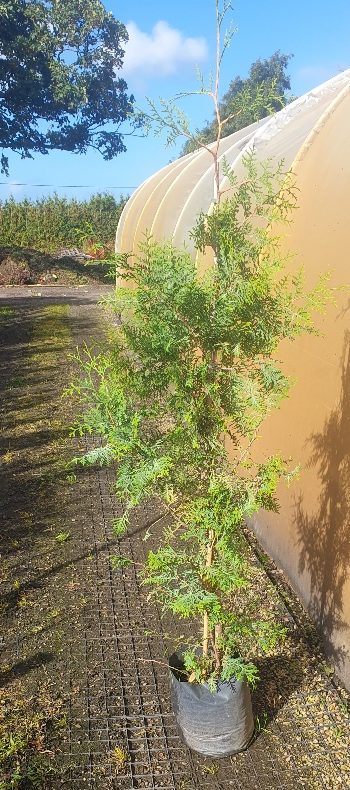
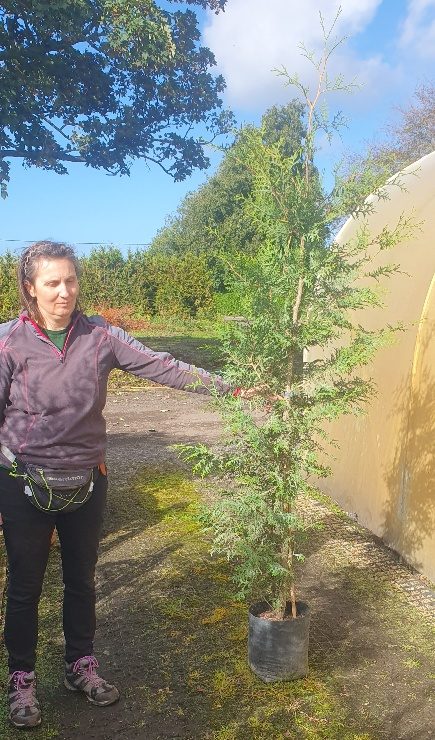
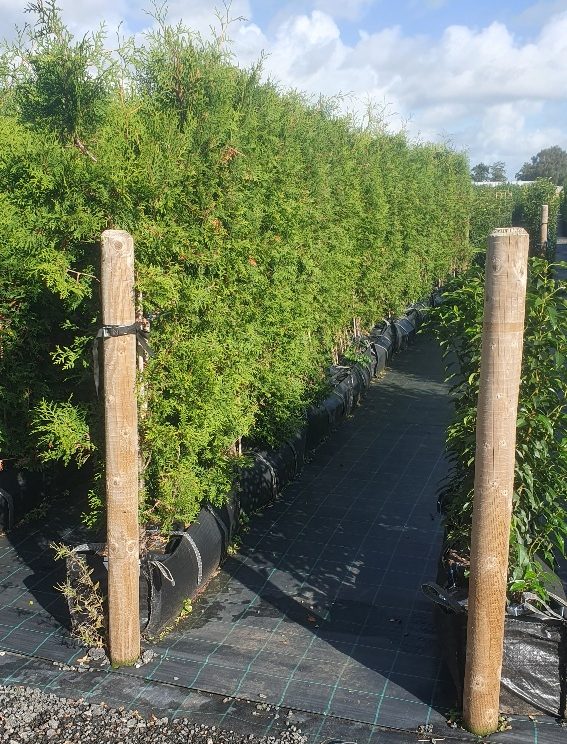
About our Thuja hedging.
Thuja is a group of evergreen coniferous trees and shrubs commonly known as arborvitae or cedar. They are widely planted for hedging, screening, boundaries and ornamental structure. Popular varieties include Thuja occidentalis and Thuja plicata.
Why Plant Thuja as a Hedge?
Thuja is often used for evergreen hedging because it provides year-round foliage, creates a dense screen and generally responds well to pruning. It is particularly useful where a tall, narrow hedge is required.
Are Thuja an Evergreen Hedging Plants?
Yes. Thuja retains its foliage throughout the year, although some inner or older foliage may naturally discolour and fall. Evergreen plants can still suffer winter damage and dehydration, particularly in exposed positions.
How fast does Thuja hedging grow?
Yes, most Thuja varieties are considered fast-growing evergreen trees and shrubs, though their exact rate depends on the specific type and growing conditions.
How Tall Will Thuja Hedging Grow?
Some Thuja species can become very large trees if left untrimmed, while compact cultivars remain much smaller. Always check the expected mature height and spread of the variety before planting, especially near buildings, boundaries and overhead services.
How many Thuja Hedge plants per metre?
We would recommend that Thuja hedge be planted single row, 2 – 3 plants per metre.
How do I plant Thuja hedging?
To plant a Thuja (arborvitae), dig a hole twice as wide and just as deep as the root ball, set the plant level or slightly above the ground line, and water it thoroughly. We recommentd planting in autumn (October to December) or spring (February to April) when the soil is workable and moist, if possible select a location with full sun or partial shade.We give advice on how to plant a hedge here.
When to trim a Thuja hedge?
The best time to prune a thuja hedge or tree is twice a year: once in early May (this first cut helps activate growth, stimulates new branches and helps young trees fill out) and a second time in late August to September (This second cut happens as the sap slows down. It cleans up the shape and keeps the plant neat before winter without triggering vulnerable new growth). Only prune on mild, dry and overcast days, for the best results.
Can you hard prune a Thuja hedge?
You can hard prune a Thuja (Arborvitae), and unlike many other conifers, it can regenerate from older wood. We recommend that you be careful not to cut deep into leafless brown wood, as old brown branches rarely sprout new growth.
How to trim or cut a Thuja hedge?
We recommend trimming thuja hedges twice a year—in May and from late August to September—cutting only the green outer foliage, always trim from the top. Use a string guide tied between the stakes to keep the height even and consider a lightly rounded top in snowy regions, top prevent heavy snowfall from damaging branches.
Feeding a Thuja hedge?
Thuja often grows well without regular feeding when planted in fertile soil. If growth is weak or the foliage is pale, test the soil or seek advice before applying fertiliser. Excessive fertiliser can damage roots and encourage soft growth.
What type of soil and conditions will a Thuja hedge grow in?
A Thuja hedge (such as Thuja occidentalis or Thuja plicata) thrives best in moist, fertile, well-drained soil with a neutral to slightly acidic pH. More details here.
Are Thuja hedges easy to maintain?
Thuja is low maintenance once established. Water deeply during prolonged dry spells in the first couple of years. Apply mulch annually to conserve moisture and feed with a balanced slow-release fertiliser in spring.
Do you grow Instant Thuja Hedges?
We do grow Instant Holly hedges here on the nursery.
What Thuja hedging plants do you have for sale?
We grow a range of sizes of Thuja hedging plants for sale here on the nursery. We grow potted Thuja hedging plants, mainly in 10 litre pots up to 160cm. For more immediate impact, we also grow our Instant Thuja Hedges in 90 Litre troughs. The instant hedges come in 1 metre lengths but do require 2 strong people to lift them.
Do you grow your own Thuja hedging Plants?
We do grow Thuja hedges here on the nursery.
Are Thuja hedging plants poisonous?
Yes, Thuja (arborvitae) plants are mildly toxic if ingested and contain a compound called thujone in their foliage and essential oil. Thuja foliage is mildly toxic if ingested and should not be consumed by pets or livestock. However, it is safe for use in gardens with pets as long as they don’t chew on the leaves.
Growing Advice
- Thuja Hedge Planting Distances – Single row. 2 – 3 plants per metre
- Evergreen Conifer Tree
- Features: Mid to Dark Green leaves, Can be kept formal, Fast growing, Pleasant aroma of foliage
- Likes full sun or partial shade
- Suitable for Hedges: 1.8 metres+ / 6 foot +
- Soil Preference: Prefers moist but well drained, Will tolerate shallow chalk soil
- Unsuitable for: Very wet soils
- Average Growth rate: Medium – Fast 45 – 60cm per annum
- Trimming: Spring and early Autumn
All our Thuja Hedging plants are container grown and will have a fully intact and undisturbed root system. They will establish quicker than root-balled plants with fewer losses as there has been no disturbance to the root system.