
Where Can I Plant a Griselinia Hedge?
Griselinia is a versatile evergreen hedge that performs particularly well in mild, coastal and sheltered parts of the UK. It is widely chosen for privacy screening, garden boundaries and wind protection because it grows quickly, stays green throughout the year and responds well to regular trimming.
The best place to plant a Griselinia hedge is in a sunny or lightly shaded position with free-draining soil, ideally somewhere protected from severe frost and very cold drying winds. It is especially well suited to coastal gardens, where its thick, leathery foliage copes well with wind and salt-laden air.
Griselinia is adaptable, but it is not the right hedge for every site. Cold exposed inland gardens and consistently waterlogged ground can cause problems, so it is worth looking carefully at the conditions before planting.
What conditions does Griselinia prefer?
For the strongest, healthiest growth, we recommend a site with:
- full sun or light partial shade
- well-drained soil
- reasonable shelter from severe cold winds
- enough space for the hedge to develop in width
- good airflow
- reliable access to water while the plants establish
Griselinia is relatively tolerant once established, but getting these basics right will make a significant difference to growth rate, density and winter resilience.
Is Griselinia suitable for coastal gardens?
Yes. Coastal gardens are one of the places where Griselinia really comes into its own.
It is particularly useful in mild coastal areas because its thick, leathery leaves tolerate wind and salt exposure better than many evergreen shrubs. This makes it a popular choice for:
- seaside gardens
- coastal properties
- exposed garden boundaries
- windbreaks
- screening around patios and seating areas
- boundaries facing prevailing sea winds
A Griselinia hedge can help filter wind rather than creating the sudden turbulence sometimes produced by a solid fence or wall.
Even though Griselinia is well suited to coastal conditions, newly planted hedges still need careful watering. Strong winds increase moisture loss through evergreen foliage, so a young hedge can dry out even when temperatures are relatively cool.
Can Griselinia be planted in exposed positions?
Griselinia can cope with exposure, but the type of exposure matters.
It generally handles mild coastal wind much better than very cold inland wind. Salt-bearing sea winds are not necessarily a problem, whereas freezing easterly or northerly winds can scorch foliage and damage shoots.
We would be more cautious about Griselinia in:
- high-altitude gardens
- frost pockets
- very cold inland locations
- exposed north- or east-facing sites
- gardens regularly affected by severe winter winds
If the site is exposed but otherwise mild, Griselinia can still work very well.
In colder locations, providing shelter from the worst prevailing winds can make a significant difference.
Can Griselinia be planted in full sun?
Yes. Full sun is an excellent position for Griselinia.
Good light encourages:
- strong growth
- dense branching
- healthy leaf colour
- even development
- quicker establishment
A sunny site is particularly useful if you want a thick privacy hedge.
The main consideration is moisture. A newly planted hedge in full sun can dry out quickly during spring and summer, especially if it is also exposed to wind.
Keep the root zone well watered during the establishment period and apply mulch to help the soil retain moisture.
Will Griselinia grow in partial shade?
Griselinia can tolerate light partial shade and may still make a good hedge in a position that receives sun for only part of the day.
This makes it useful for:
- boundaries shaded for part of the morning or afternoon
- gardens where nearby buildings create intermittent shade
- planting alongside fences
- sites receiving filtered light from nearby trees
Growth may be slightly slower in shade than in full sun, and the hedge may not become quite as dense if light levels are very low.
Light shade is usually manageable. Deep, permanent shade is less suitable.
Can Griselinia grow in full shade?
We would not normally recommend Griselinia for deep shade.
A heavily shaded hedge may:
- grow slowly
- become thin or open
- lean towards the available light
- lose density at the base
- develop weaker, softer shoots
- take much longer to form an effective screen
If the planting area receives virtually no direct or indirect bright light, another hedge plant may be a better choice.
Before planting, consider how the light changes through the seasons. A site that looks bright in winter may become heavily shaded once nearby deciduous trees come into leaf.
Which direction should a Griselinia hedge face?
South- and west-facing positions are generally ideal because they tend to be warmer and brighter.
Griselinia can also grow successfully on other aspects, provided the site is reasonably mild and protected.
South-facing
Usually excellent for Griselinia. The hedge receives plenty of light and warmth, supporting strong growth.
The main issue is keeping newly planted roots moist during hot weather.
West-facing
Also very suitable. A west-facing hedge usually receives good afternoon and evening light.
Exposure to prevailing winds should be considered, particularly in open sites.
East-facing
An east-facing position can work in mild locations, but cold easterly winds may cause winter damage in more exposed areas.
If the site is frost-prone or very exposed, we would consider whether additional shelter is needed.
North-facing
A north-facing boundary is more challenging because of reduced light and potentially colder conditions.
Griselinia may still grow where the site is bright and relatively sheltered, but a deeply shaded north-facing boundary would not be our first choice.

What soil is best for Griselinia?
Griselinia grows best in fertile, well-drained soil.
It can cope with a range of soil types, including:
- loam
- sandy soil
- chalky soil
- some clay soils, provided drainage is adequate
The single most important factor is drainage.
Griselinia does not like having its roots sitting in persistently wet soil. Poor drainage can result in yellow foliage, weak growth, root damage and eventually plant loss.
Before planting, we recommend checking how the proposed hedge line behaves after prolonged rain.
Can Griselinia grow in clay soil?
Yes, Griselinia can grow in clay soil, but only if the site drains adequately.
Clay itself is not necessarily the problem. The issue arises where heavy clay remains saturated for long periods.
Before planting into clay, check whether:
- water remains on the surface after rainfall
- planting holes fill with water
- the soil becomes sticky and airless in winter
- nearby plants struggle with wet roots
If drainage is reasonable, Griselinia can establish successfully.
Where clay is heavily compacted, prepare a broad planting strip rather than simply digging individual holes. Loosening the surrounding soil allows roots to spread and reduces the risk of creating water-filled planting pockets.
Can Griselinia grow in sandy soil?
Yes. Griselinia can grow well in sandy soil, particularly in coastal gardens.
Sandy ground usually provides excellent drainage, which suits the plant.
The main challenge is moisture retention. Sandy soils can dry very quickly, especially during windy or warm weather.
We recommend:
- incorporating organic matter before planting where appropriate
- mulching after planting
- watering deeply during establishment
- checking moisture regularly in summer
Once well established, the hedge will generally cope better with short dry periods.
Can Griselinia grow in chalky soil?
Griselinia can grow in chalky soils where drainage is good.
If the soil is extremely thin or poor, improving the planting area with organic matter can help young plants establish.
As with all soils, the focus should be on creating a root zone that is:
- free draining
- workable
- not heavily compacted
- capable of holding enough moisture between watering
Can Griselinia grow in acidic or alkaline soil?
Griselinia is relatively adaptable when it comes to soil pH and can grow in acidic, neutral or alkaline conditions.
This makes it suitable for a wide range of gardens.
Rather than concentrating too heavily on pH, we would normally give greater attention to:
- drainage
- soil structure
- moisture
- root competition
- exposure
These factors are much more likely to determine whether the hedge thrives.
Can Griselinia be planted in wet soil?
Persistently wet soil is one of the situations where we would advise caution.
Griselinia needs moisture, particularly when establishing, but there is an important difference between moist soil and waterlogged soil.
Roots need oxygen as well as water. Where soil remains saturated, roots can begin to die and become vulnerable to root diseases.
Signs that a site may be too wet include:
- standing water after rain
- water collecting in planting holes
- permanently boggy soil
- existing shrubs struggling or dying
- sour-smelling or blackened soil
- heavy compaction
If the site naturally stays wet throughout winter, another hedge species may be more suitable unless the drainage can be improved effectively.

Is Griselinia suitable for northern England?
Yes, Griselinia can grow successfully in parts of northern England, but the individual site matters much more than the region alone.
A sheltered coastal garden in the North West may be much more suitable than an exposed inland garden at elevation.
Before choosing Griselinia in colder regions, consider:
- winter minimum temperatures
- exposure
- altitude
- prevailing winds
- frost frequency
- proximity to the coast
- whether the site has natural shelter
In cold, exposed locations, a hardier evergreen hedge may be a safer long-term choice.
Is Griselinia suitable for Scotland?
Griselinia can be grown successfully in parts of Scotland, particularly in milder western and coastal areas.
However, we would assess the site carefully before recommending it for colder inland or exposed locations.
Sheltered urban gardens, coastal areas and milder microclimates can often support Griselinia well.
Very exposed, high-altitude or frost-prone sites may be less reliable.
The key is not simply how far north the garden is, but the actual winter conditions the hedge will experience.
Can Griselinia be planted beside the sea?
Yes. This is one of its strongest uses.
Griselinia’s leathery evergreen foliage makes it particularly valuable for gardens affected by:
- sea spray
- salt-laden wind
- strong coastal breezes
- exposed boundaries
It can also be used as an initial shelter hedge, helping create calmer conditions for more sensitive plants behind it.
Very young plants can still suffer if they are planted directly into extreme exposure, so temporary protection may be worthwhile while the root system establishes.
Can Griselinia be planted next to a fence?
Yes, but do not position the hedge too close.
Remember that Griselinia can become a substantial hedge. The planting line needs to allow enough room for the plants to reach their intended finished width.
Before planting, consider:
- access for future trimming
- airflow behind the hedge
- how wide you want the finished screen
- whether branches will become trapped against the fence
- whether the fence creates a rain shadow
A hedge planted tightly against a fence can become one-sided because the rear receives very little light.
Where possible, leave enough room for healthy development and future maintenance.
Can I plant Griselinia against a wall?
Yes, provided there is sufficient room and light.
Walls can create warm, sheltered conditions that Griselinia often appreciates, but they can also create dry soil because rainfall does not always reach the ground immediately beside them.
When planting near a wall:
- leave room for the eventual hedge width
- check the soil is not excessively dry
- water carefully during establishment
- avoid burying roots among foundations or rubble
- consider how much sunlight reaches the area
- allow access for trimming
A warm south- or west-facing wall can create particularly favourable conditions.
Can Griselinia be used as a front garden hedge?
Yes. Griselinia can make an excellent front garden hedge where conditions are suitable.
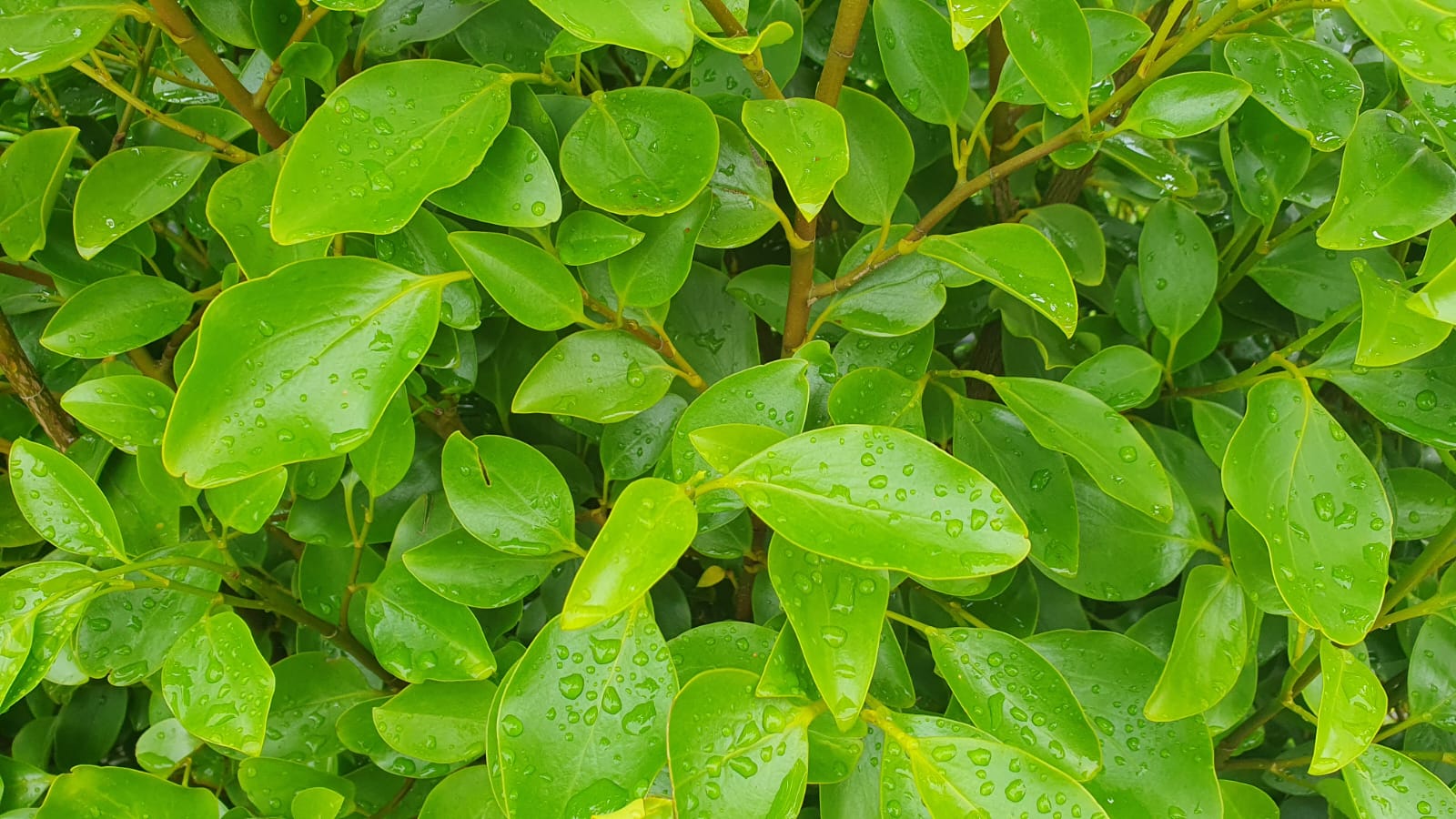
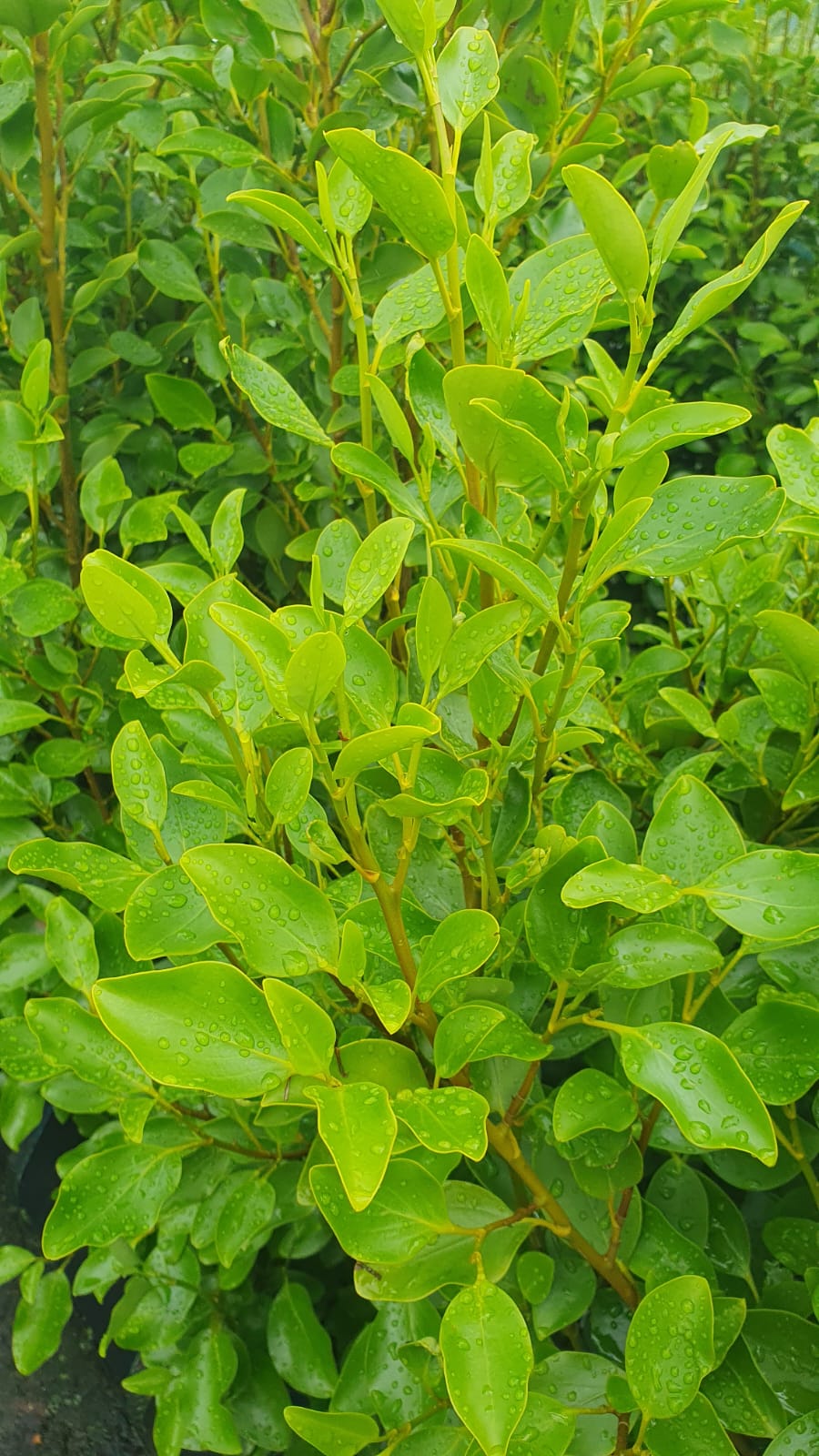
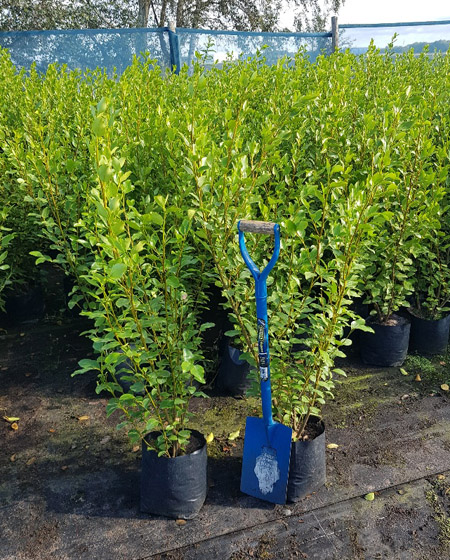
Its bright green foliage creates a softer appearance than many darker evergreen hedges, while still providing year-round screening.
It can be maintained at:
- around 1 metre for a low boundary
- 1.2–1.5 metres for moderate privacy
- 1.8 metres or more for stronger screening
Before creating a tall front hedge, consider visibility around driveways, road junctions and pedestrian access.
Is Griselinia suitable for a small garden?
It can be, provided you are happy to trim it regularly.
Standard Griselinia is naturally a large shrub and may eventually reach several metres in both height and width if left unchecked.
In a small garden, we recommend:
- setting a clear maximum height
- maintaining the width regularly
- allowing enough planting distance from paths and buildings
- choosing an appropriate variety
- starting annual trimming as soon as the hedge reaches its intended size
If you want a very narrow or extremely low-maintenance hedge, another species may be easier to manage.
Is Griselinia suitable for a large garden?
Yes. In larger gardens, Griselinia can be especially useful because there is more room to take advantage of its natural vigour.
It works well for:
- long boundary screens
- windbreaks
- dividing large garden areas
- screening buildings or outbuildings
- creating sheltered sections
- providing evergreen structure
A taller Griselinia hedge can create significant screening while maintaining a softer appearance than a solid fence.

Can I plant Griselinia near existing hedges?
Yes, but root competition needs to be considered.
An established hedge has a large existing root system and can take significant amounts of water from nearby soil.
A newly planted Griselinia hedge beside an established boundary may need:
- more frequent watering
- better soil preparation
- a wider weed-free planting strip
- mulch
- additional monitoring during dry periods
Do not assume that because the existing hedge thrives, a newly planted one will establish easily beside it.
Can Griselinia be grown in containers?
Individual Griselinia plants can be grown in large containers, particularly while young, but creating a permanent full-sized hedge in pots is much more demanding than planting into open ground.
Container-grown plants require:
- large containers
- excellent drainage
- regular watering
- feeding
- root management
- protection from extreme cold
- eventual repotting or root pruning
For permanent privacy screening, planting into the ground is normally the more practical option wherever possible.
Is Griselinia suitable for windy gardens?
Yes, particularly in mild climates.
Griselinia can make an effective windbreak because its evergreen branches filter wind throughout the year.
A living hedge generally slows wind rather than stopping it abruptly, which can help create a more sheltered garden behind it.
However, wind tolerance should not be confused with unlimited cold tolerance.
A mild coastal gale and an icy inland winter wind are very different conditions.
In exposed inland gardens, consider the combination of wind and temperature before planting.
Where should Griselinia not be planted?
We would think carefully before planting Griselinia in:
- permanently waterlogged soil
- deep shade
- severe frost pockets
- high-altitude exposed locations
- extremely cold inland sites
- positions exposed to repeated freezing winds
- narrow spaces where its width cannot be maintained
- areas where drainage cannot be corrected
It may survive in some challenging situations, but simply surviving is not the same as producing the dense, healthy hedge most people want.
Choosing a species genuinely suited to the site will always give better long-term results.
What is the ideal location for Griselinia?
If we were choosing an ideal location, it would be:
- mild
- sunny or lightly shaded
- free draining
- reasonably fertile
- protected from severe cold winds
- spacious enough for the planned hedge width
- accessible for future maintenance
A mild coastal garden with good drainage is particularly well suited to Griselinia.
In those conditions, it can establish quickly and develop into a dense, attractive evergreen hedge.
Check the site before you buy
Before choosing your plants, we recommend checking:
- How much sunlight the hedge line receives.
- Whether the soil drains after heavy rain.
- How exposed the area is in winter.
- Which direction the prevailing wind comes from.
- Whether the site is prone to frost.
- How wide and tall the finished hedge can realistically become.
- Whether you will be able to trim both sides.
- Whether nearby trees or hedges will create root competition.
- How easily the plants can be watered during establishment.
- Whether the location suits Griselinia’s long-term requirements rather than just its size when purchased.
A few minutes spent assessing the location can prevent years of poor growth or repeated plant replacement.
Final thoughts
Griselinia grows best in a sunny or lightly shaded position with free-draining soil and protection from severe cold winds. It is particularly well suited to mild coastal gardens, where its evergreen, leathery foliage copes well with wind and salt exposure.
It can also grow successfully in many inland gardens, provided the site is reasonably sheltered and does not experience severe frost or prolonged waterlogging.
The most important things to consider are drainage, winter exposure, light and available space. Avoid deep shade, severe frost pockets and permanently wet soil, and remember to allow enough room for the hedge’s mature width.
Choose the site well, prepare the soil properly and provide consistent watering while the plants establish, and Griselinia can develop into a dense, attractive evergreen screen that performs well for many years.
For more Griselinia Advice, see our other articles: