Privet Hedge Planting Guide
Privet has long been one of the most useful hedging plants for UK gardens. It is reliable, easy to work with, and well-suited to anyone who wants a hedge that establishes well, clips neatly, and gives a smart, structured finish. Garden privet, including Ligustrum ovalifolium, grows well in sun or partial shade and is widely recommended for hedging and screens in well-drained or moist but well-drained soil.
One reason privet is so widely planted is its adaptability. It copes with a range of conditions, responds well to trimming and can be used for anything from a neat front boundary to a larger dividing hedge. It is often described as almost evergreen in milder conditions, though some leaf loss can happen in colder winters.
If you want a privet hedge to establish quickly and grow into a healthy, dense screen, planting it properly from the start makes all the difference. Good timing, sensible spacing, careful soil preparation and consistent aftercare will usually have more impact than anything you do later.
Why choose privet for a hedge?
Privet is a strong choice for anyone who wants a practical, hardworking hedge. In our experience, it is especially useful when a customer wants something that can be kept neat without being too demanding. It is suitable for hedging and screens, tolerates sun or part shade, and is known for coping well in a wide range of gardens.
We often recommend privet where the priority is:
- a classic, tidy hedge
- a plant that responds well to clipping
- a hedge for sun or partial shade
- a dependable choice for general boundary planting
It is also a useful option in newer gardens, where the soil can be unimproved or awkward. Privet can cope with poor ground conditions often found in new-build settings.
Privet Hedge Planting Guide
Choosing the right type of privet
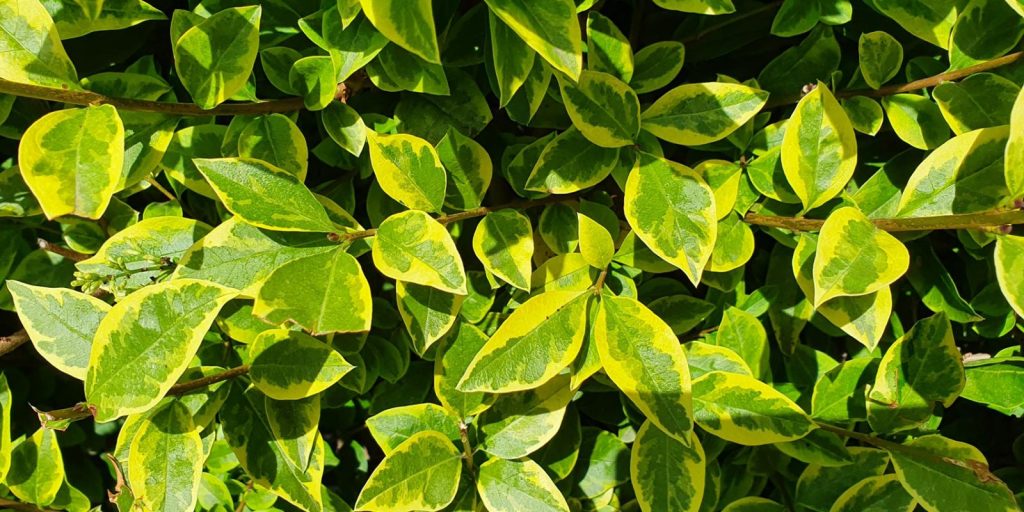
Before planting, it is worth deciding which privet is right for the space. Green privet is the traditional choice for a classic hedge, while golden forms, such as Ligustrum ovalifolium ‘Aureum’, can add more colour. The yellow form of privet can be a particularly good choice for a new hedge, and golden privet also grows in sun or partial shade in well-drained or moist but well-drained soil.
In practical terms, the right choice depends on the look you want. If the aim is a traditional, green boundary hedge, standard privet is often the obvious option. If you want a brighter, more decorative finish, one of the variegated or golden forms may suit you better.
When is the best time to plant a privet hedge?
The best planting time depends on how the plants are supplied.
Bare root privet is best planted while dormant, typically from late autumn to early spring, avoiding periods when the ground is frozen or waterlogged. Container-grown privet is more flexible and can be planted at most times of year, but we still find autumn and spring are usually the easiest windows because the soil is workable and moisture levels are more reliable. This fits with general UK hedge-planting practice and current nursery guidance on dormant-season planting for field-grown hedging.
Where possible, we suggest avoiding the height of summer unless you are confident you can maintain consistent watering. Newly planted hedges are always more vulnerable in hot, dry spells.
Choosing the right planting position
Privet is adaptable, but choosing the right location still matters. Garden privet grows in sun or partial shade and is suited to well-drained or moist but well-drained soil. Some privet forms specifically advise avoiding areas prone to waterlogging.
Before planting, we recommend thinking about:
- the final height and width you want to maintain
- how close the hedge will be to fences, walls or paths
- how much sunlight the area receives
- whether the site drains freely after heavy rain
Privet is forgiving, but like most hedge plants, it will struggle if planted in persistently wet ground.
Soil preparation for privet hedging
A privet hedge will usually establish far better if the ground is prepared properly. We recommend clearing the full planting line of weeds, grass and rubble before you start. This gives the hedge the best chance to root into the soil without having to compete straight away.
Rather than just digging individual holes, we often suggest preparing a full strip along the hedge line. For example, plants up to 60cm in a single row are guided in a strip around 30cm wide and 20cm deep, while larger hedge plants need a wider, deeper prepared strip.
If the ground is compacted, loosening it beforehand helps roots spread more easily. If the soil is poor, mixing in organic matter can help improve structure and moisture retention.
How far apart should privet plants be spaced?
Spacing depends on the size and type of privet you are planting, as well as how quickly you want the hedge to knit together. Smaller bare-root plants are usually planted more closely than larger potted or root ball plants. Bushier plants need enough space to sit comfortably without being crammed together.
In our experience, the best approach is to think about balance. Plant too widely and the hedge takes longer to fill. Plant too tightly and the young plants can end up competing unnecessarily for light, moisture and nutrients.
As a working guide:
- Smaller young plants can usually be planted at a tighter spacing
- Larger established plants need more room
- Formal hedges are often planted slightly more closely than looser informal screens
If you already know the plant size you will be using, we can provide a more precise spacing guide for the finished article later.
Single row or double row?
Most privet hedges are planted in a single row and perform very well that way. For a typical boundary hedge, a straight single row is usually the simplest and most practical approach.
A staggered double row can be used when a very dense screen is needed from the start, but it also requires more plants, more room, and more careful maintenance. For most garden privet hedges, a single row is enough.
How to plant a privet hedge
Once the ground is ready, lay the plants out along the line before planting to check spacing and make any adjustments.
We recommend the following method:
- Dig the planting trench or individual holes wide enough for the roots or root ball to sit comfortably.
- Position each plant so it sits at the same depth it was growing before.
- Backfill with soil and firm gently but thoroughly around the roots.
- Water the hedge well after planting.
- Mulch around the base to help conserve moisture and suppress weeds.
With root ball plants, keep the hessian around the root area in place, as it will rot down naturally over time.
The main thing is to avoid planting too deeply and to make sure the roots are properly in contact with the surrounding soil.
Watering after planting
Watering is one of the most important parts of privet hedge establishment. Even though privet is tough once settled, a newly planted hedge still needs regular moisture while roots develop. Water thoroughly after planting, around 5 litres for smaller evergreens under 1 metre, 10 litres for medium plants from 1 to 2 metres, and 20 litres for large plants over 2 metres.
For practical aftercare, we recommend:
- watering thoroughly straight after planting
- checking moisture regularly in the first growing season
- watering more deeply in dry spells rather than giving a quick surface sprinkle
- not allowing the root zone to dry out repeatedly
If you plant in autumn or winter, rainfall may do part of the work, but do not assume the hedge will manage without checking.
Mulching and weed control
Mulch is one of the simplest ways to help a new privet hedge establish well. A layer of organic mulch helps retain moisture in the soil, reduces weed competition, and improves conditions around the roots over time.
We suggest keeping the mulch around the base of the hedge but leaving a small gap around the stems. This helps avoid excessive moisture building up directly against the plant.
Weed control matters just as much. In the first year or two, especially, grass and weeds can slow establishment by competing for water and nutrients. A clear strip along the hedge line will usually help privet settle much faster.
Feeding a newly planted privet hedge
If the soil has been prepared well, privet does not usually need heavy feeding straight away. We generally prefer to focus first on watering, weed control and soil condition. Once the hedge is established and actively growing, a suitable spring feed can be useful to support healthy growth.
Feeding can help, but it should support good planting and aftercare rather than try to compensate for poor preparation or lack of moisture.
What to expect in the first year
A newly planted privet hedge may not put on dramatic top growth immediately. Like many hedge plants, it often spends its early energy on root establishment first. That is normal.
In the first year, we usually tell customers to focus on:
- keeping the hedge watered
- keeping the base clear
- checking for any signs of stress
- allowing the plants time to settle
Once established, privet usually becomes more vigorous and easier to shape into a denser finished hedge.
Common planting mistakes to avoid
Most hedge failures stem from a few avoidable mistakes. With privet, the most common are:
- planting into waterlogged ground
- not preparing the soil properly
- spacing plants poorly
- leaving weeds and grass around the base
- not watering enough after planting
- planting too deeply
Because privet is forgiving, it can often recover from a less-than-perfect start, but the better the planting process, the quicker and stronger the results tend to be.
Is privet a good hedge for wildlife?
Privet is not only practical. It can also contribute to the wider garden environment. The RHS includes privet in hedge and environmental research looking at benefits such as capturing pollution particles and cooling local air, and privet hedges can also offer shelter as part of a more wildlife-friendly garden structure.
A healthy hedge is more than a boundary line. It can become part of the wider structure of the garden.
Final thoughts
Privet is one of the most dependable hedge plants for UK gardens. It is adaptable, easy to maintain and well-suited to anyone who wants a neat, practical hedge that establishes well. With the right planting position, proper soil preparation, sensible spacing and consistent aftercare, a privet hedge usually settles quickly and grows into a strong, useful garden feature.
The key is to get the basics right. Plant into suitable ground, water thoroughly, keep the base clear and give the hedge time to establish. Done properly, privet is one of the most straightforward and rewarding hedges to grow.