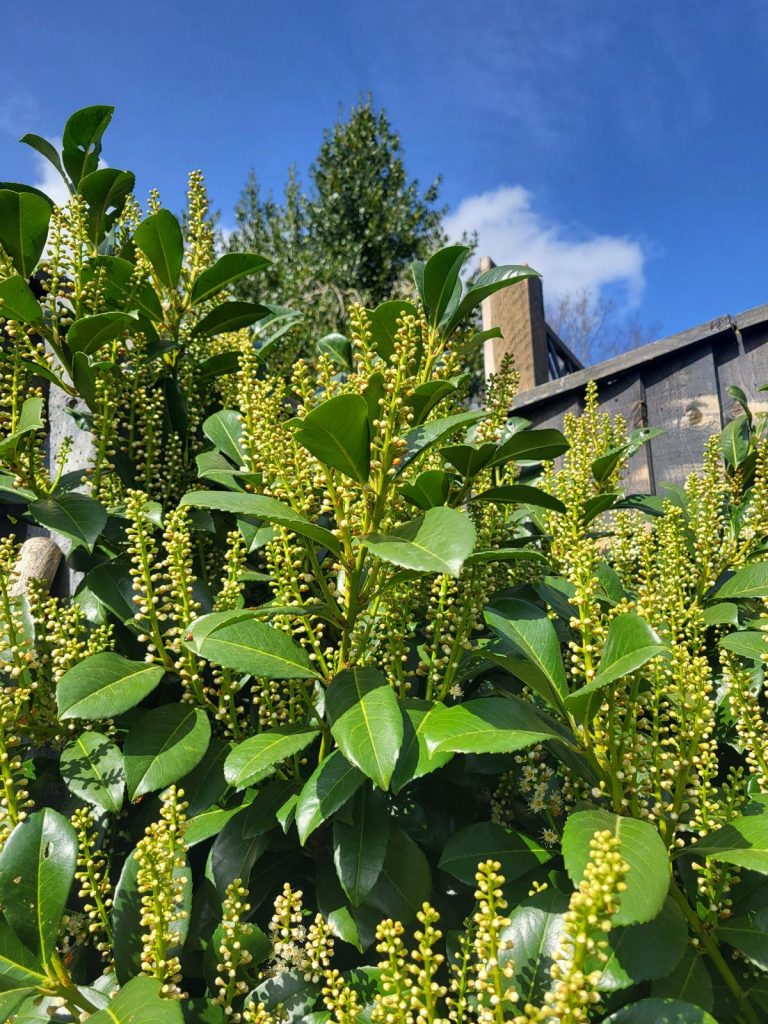
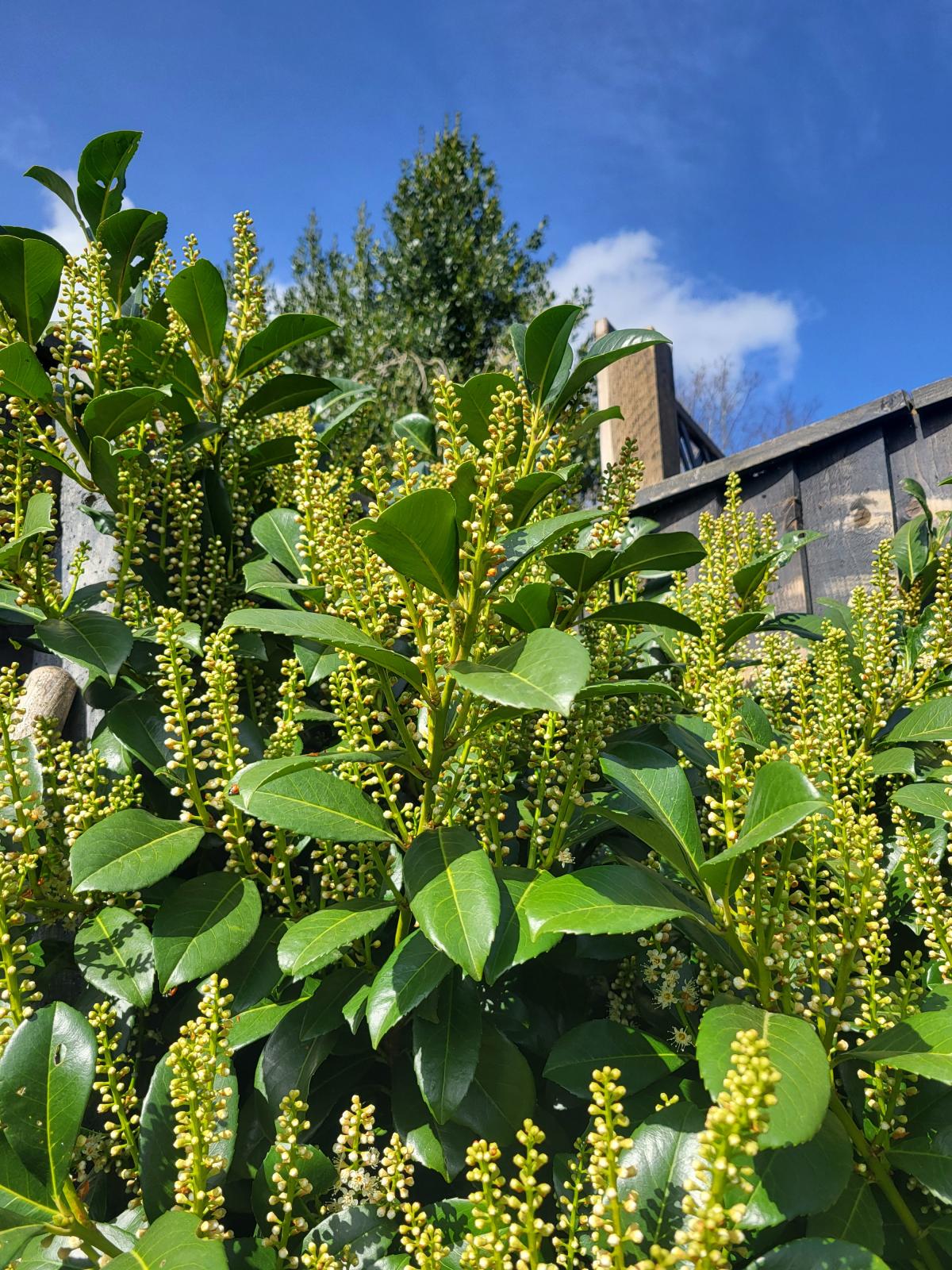
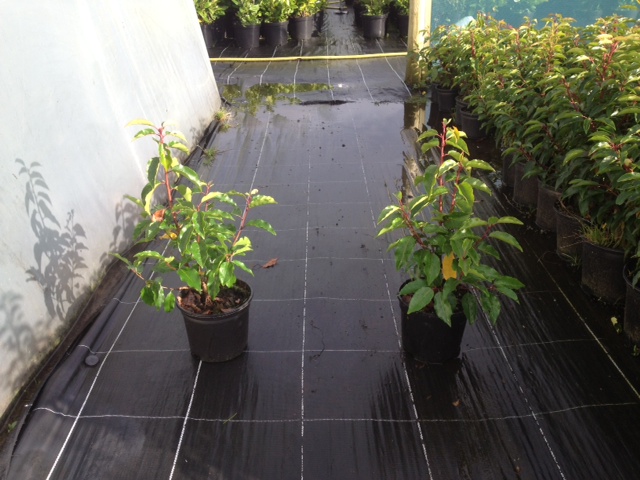
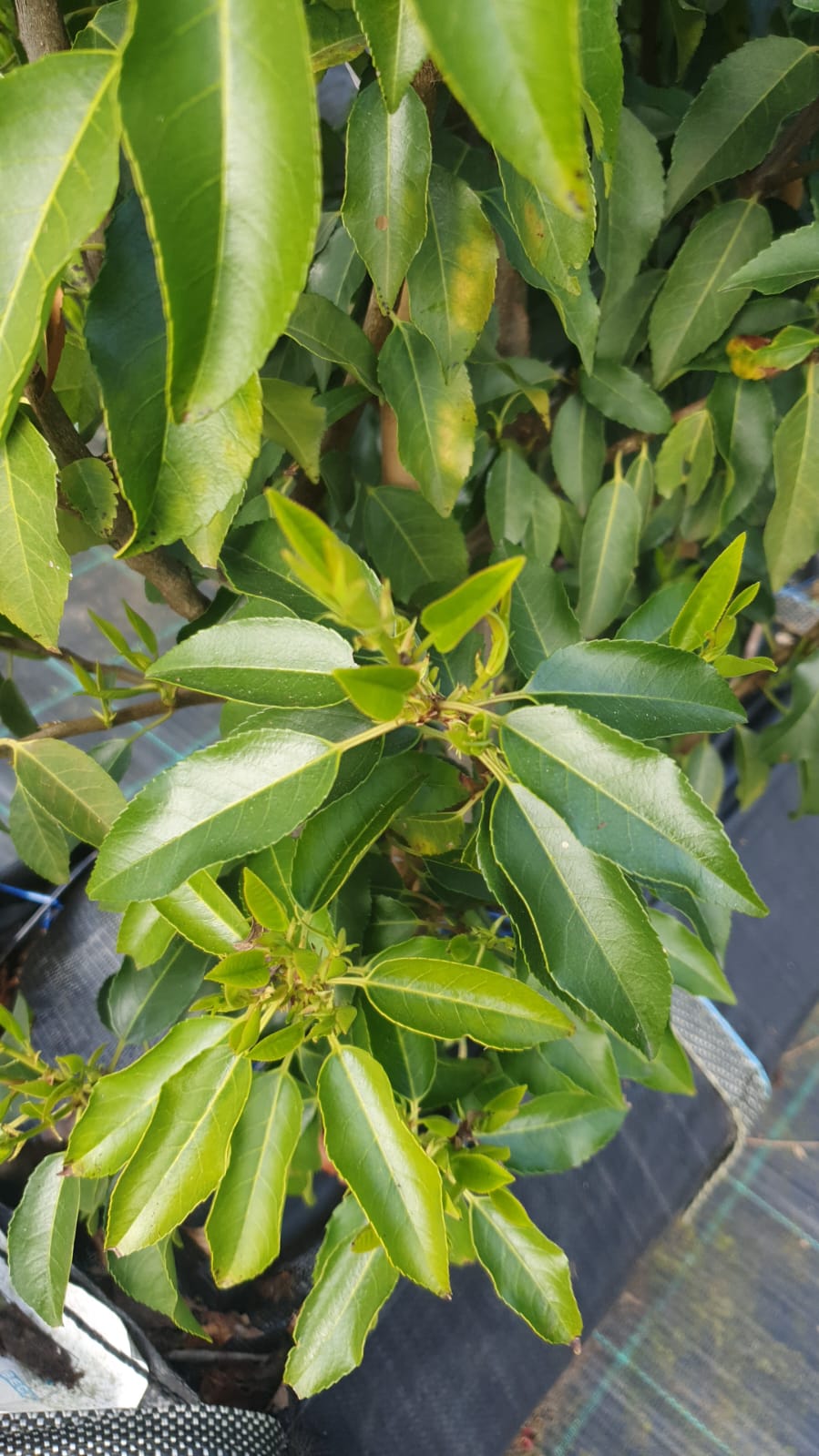
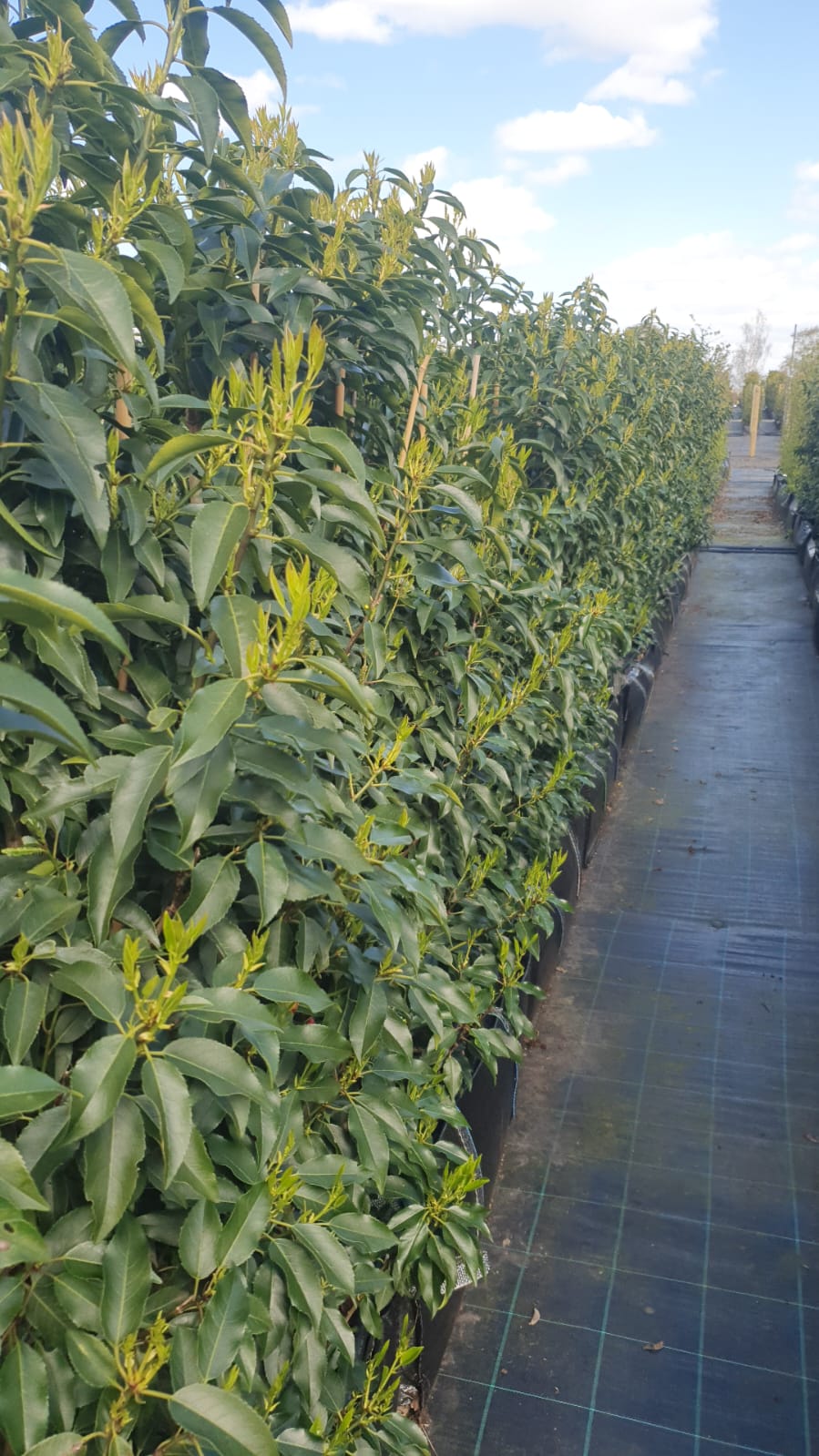
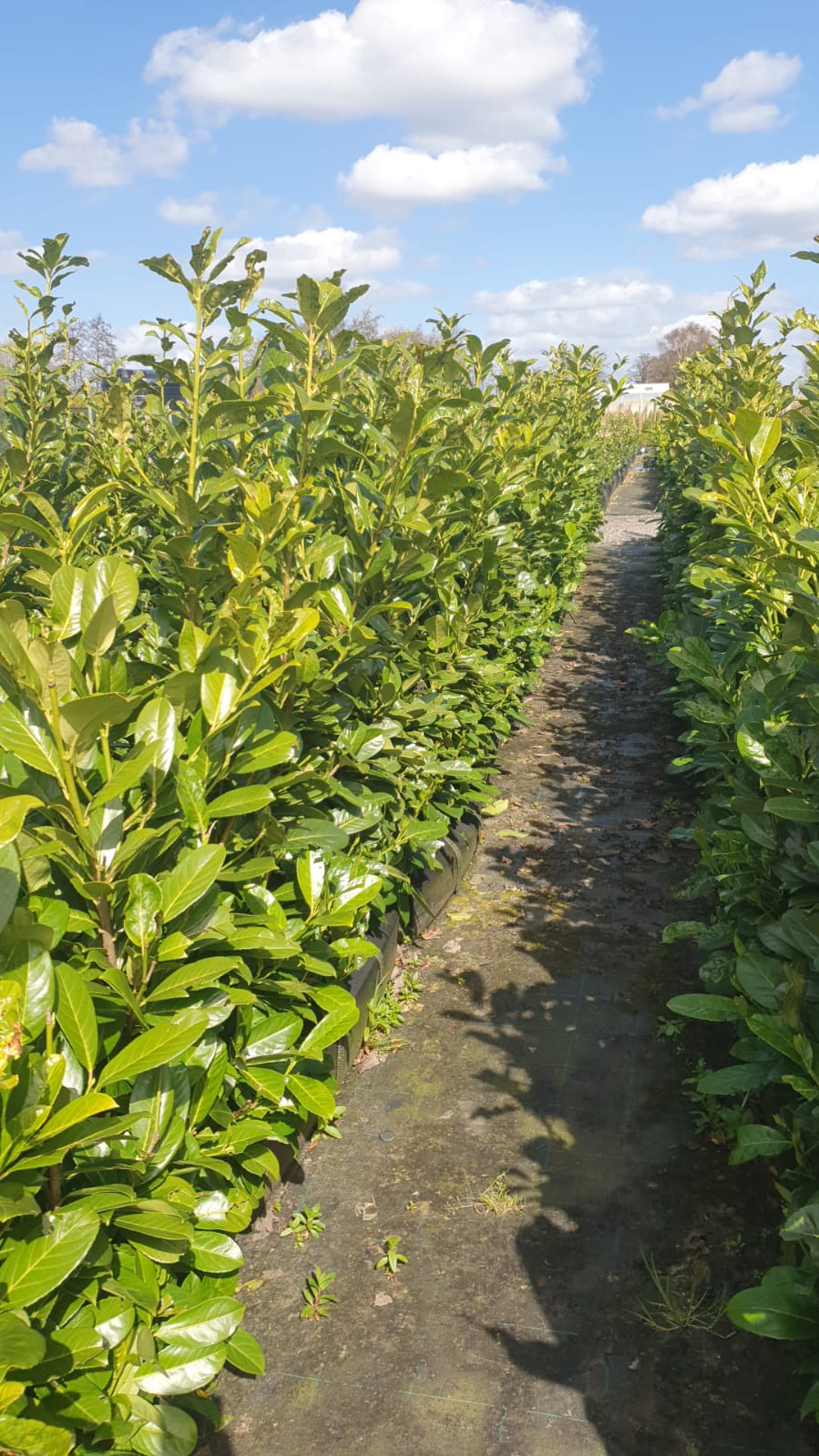
Laurel is one of the most popular hedging plants in the UK because it is evergreen, fast growing and excellent for creating privacy. Whether you are planting a new boundary, filling a gap in an existing hedge or creating a screen from scratch, laurel is a reliable choice that establishes well when planted properly.
Getting the planting right from the start makes a big difference. Good spacing, soil preparation and watering will all help your laurel hedge settle in quickly and grow into a healthy, dense screen.
Before planting, it is worth deciding which type of laurel best suits your garden. Cherry Laurel is often chosen for quick, thick screening, while Portuguese Laurel offers a more refined and formal look. Compact forms are better for smaller spaces or lower hedges.
The type you choose will affect how much space you need to allow and how quickly the hedge fills out, so it is always worth checking the likely mature size before planting.
When to Plant a Laurel Hedge
Laurel hedging is usually best planted during the cooler months of the year, when the soil is still workable and the plants are not under as much stress from heat. Autumn through to spring is generally a good planting window, particularly when the ground is not frozen or waterlogged.
Container-grown laurel can be planted at most times of year, but spring and autumn are often the easiest times for successful establishment. If planting during warmer weather, extra attention will need to be given to watering.
Where to Plant Laurel
Laurel is adaptable and can grow well in a wide range of garden settings, but like any hedge, it will perform best in the right position. Most laurel varieties prefer a spot with reasonable drainage and enough room to grow into a full hedge over time.
Before planting, think about:
how much height and width the hedge will eventually need
whether the area gets sun, shade or a mix of both
how exposed the site is to wind
how close the hedge will be to fences, walls, paths or buildings
Giving laurel enough space from the outset helps avoid problems later and makes maintenance much easier.
Preparing the Ground
Good ground preparation gives a laurel hedge the best possible start. Clear the planting line thoroughly, removing weeds, grass and any large stones. This reduces competition for water and nutrients while the plants are getting established.
Loosening the soil along the full planting area is usually better than digging only individual holes, especially if you are planting a full hedge row. This makes it easier for roots to spread out and settle into the surrounding ground. If the soil is poor, dry or heavy, adding organic matter can help improve structure and moisture retention.
Our YouTube video, kindly filmed by the guys at Lincolnshire Wildlife Park, shows a great way to plant a Laurel.
How Far Apart to Plant Laurel
Spacing depends on the size of the plants you are using and how quickly you want the hedge to fill in. A tighter planting distance will create a dense hedge sooner, while wider spacing gives each plant more room but may take longer to knit together.
The right spacing will also depend on the type of laurel. More vigorous varieties may need more room than compact forms. As a general rule, it is better to allow enough space for healthy development rather than planting too tightly and creating unnecessary competition between plants.
How to Plant a Laurel Hedge
Once the planting line is prepared, set out the plants at the correct spacing before you begin. This helps you check the layout and make adjustments before anything goes into the ground.
To plant a laurel hedge:
Dig a hole wide enough to comfortably fit the root ball.
Place the plant in the hole so it sits at the same depth it was growing before.
Backfill with soil and firm it in gently around the roots.
Water thoroughly after planting.
Repeat along the row, checking spacing as you go.
If you are planting bare root or root ball plants, the process may vary slightly, but the aim is the same: keep the roots well placed, avoid planting too deeply and make sure each plant is watered in properly.
Watering After Planting
Watering is one of the most important parts of establishing a new laurel hedge. Even though laurel is strong and dependable once settled, newly planted hedging needs regular moisture while roots are developing.
The first growing season is especially important. Plants should not be left to dry out, particularly in spring and summer or during prolonged dry spells. Deep, thorough watering is usually more effective than little and often, as it encourages roots to move down into the soil rather than staying near the surface.
Mulching Around a Laurel Hedge
Adding mulch around the base of a newly planted laurel hedge can be very helpful. A layer of mulch helps the soil hold moisture, reduces weed growth and gives the hedge a tidier finish.
Keep mulch around the base area, but avoid piling it directly against the stems. Leaving a small gap helps prevent excess moisture from building up around the plant itself.
Feeding and Early Care
A newly planted laurel hedge does not usually need heavy feeding straight away if the ground has been prepared well, but it does benefit from general good care in the first year. Keeping the area weed free, watering in dry weather and checking plants regularly will all help them settle well.
If growth seems slow or the soil is poor, a suitable feed in the growing season may help encourage healthy establishment, but it is usually best to focus on consistent moisture and good soil conditions first.
How Long Does Laurel Take to Establish?
Laurel is often chosen because it grows relatively quickly compared with many other hedging plants. That said, newly planted hedges still need time to root in and settle before strong top growth really takes off.
In the first year, much of the plant’s energy goes into establishment below ground. Once settled, laurel will usually begin to put on more noticeable growth and fill out into a denser screen.
Common Mistakes When Planting Laurel
Most planting problems come down to a few simple issues. Avoiding these early on can make a big difference to how well the hedge performs.
Common mistakes include:
planting too deeply
allowing weeds and grass to compete around the base
not watering enough after planting
planting too close together or too close to structures
choosing the wrong type of laurel for the space available
A little preparation at the start is usually far easier than trying to correct problems later.
Final Thoughts
Planting a laurel hedge is a straightforward job when done properly, and the results can be well worth it. With the right variety, good spacing and proper aftercare, laurel will establish into a strong evergreen hedge that provides structure, screening and year-round interest.
The key is not to rush the basics. Prepare the ground well, plant carefully and keep the hedge well watered while it settles in. A good start gives your laurel hedge the best chance of growing into a healthy, dense and long-lasting feature.