Benefits of Yew Hedges
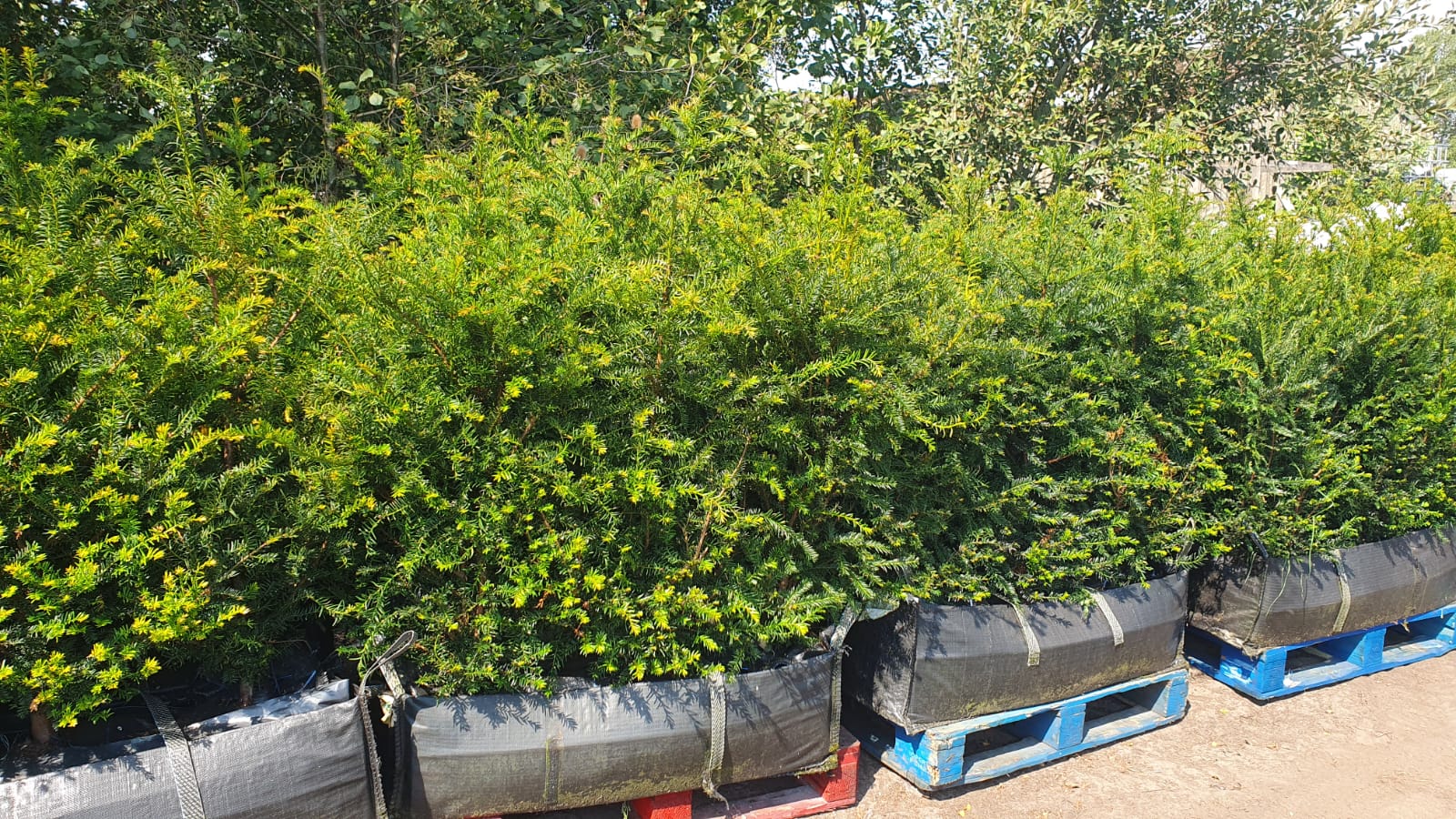
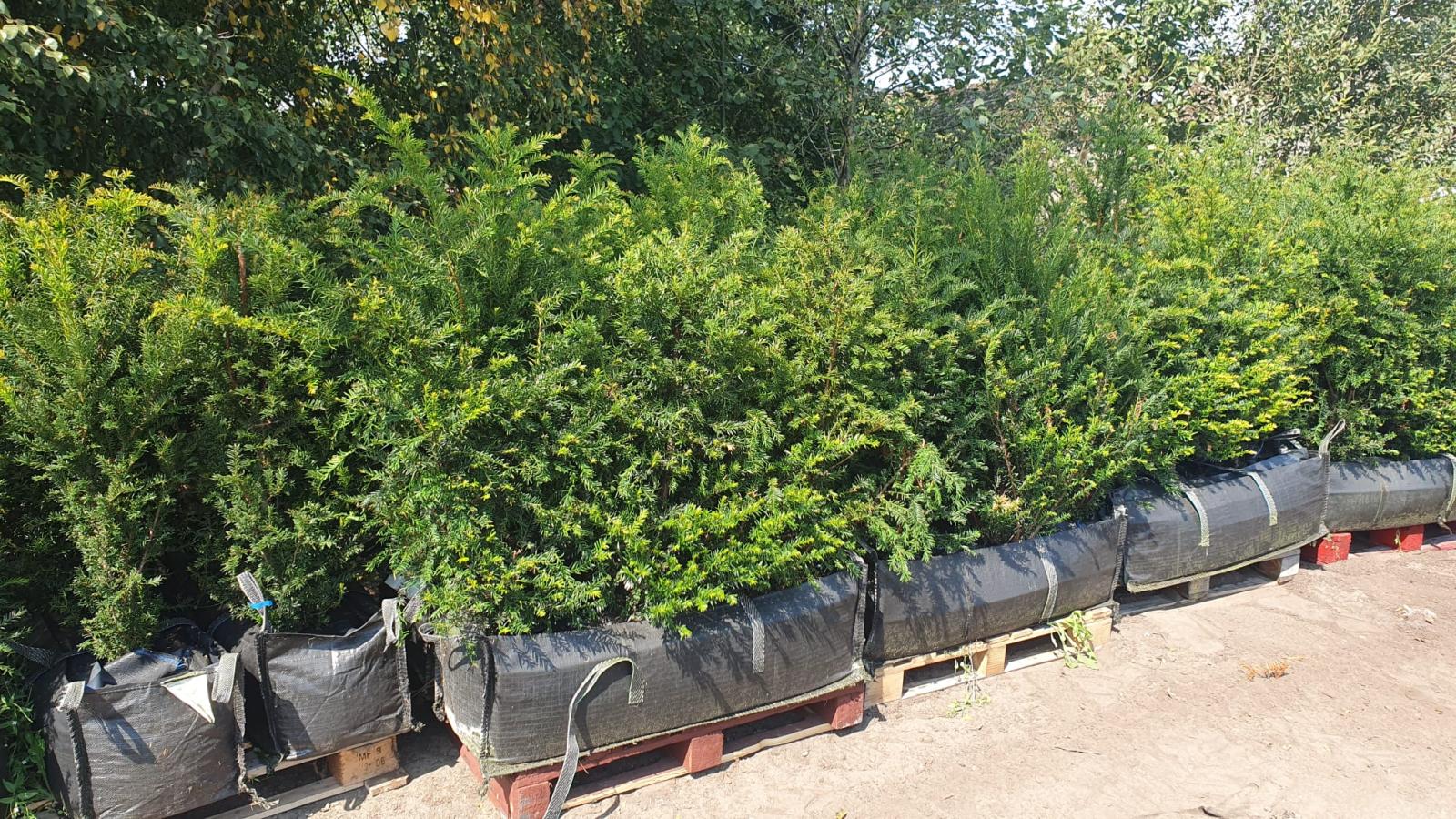
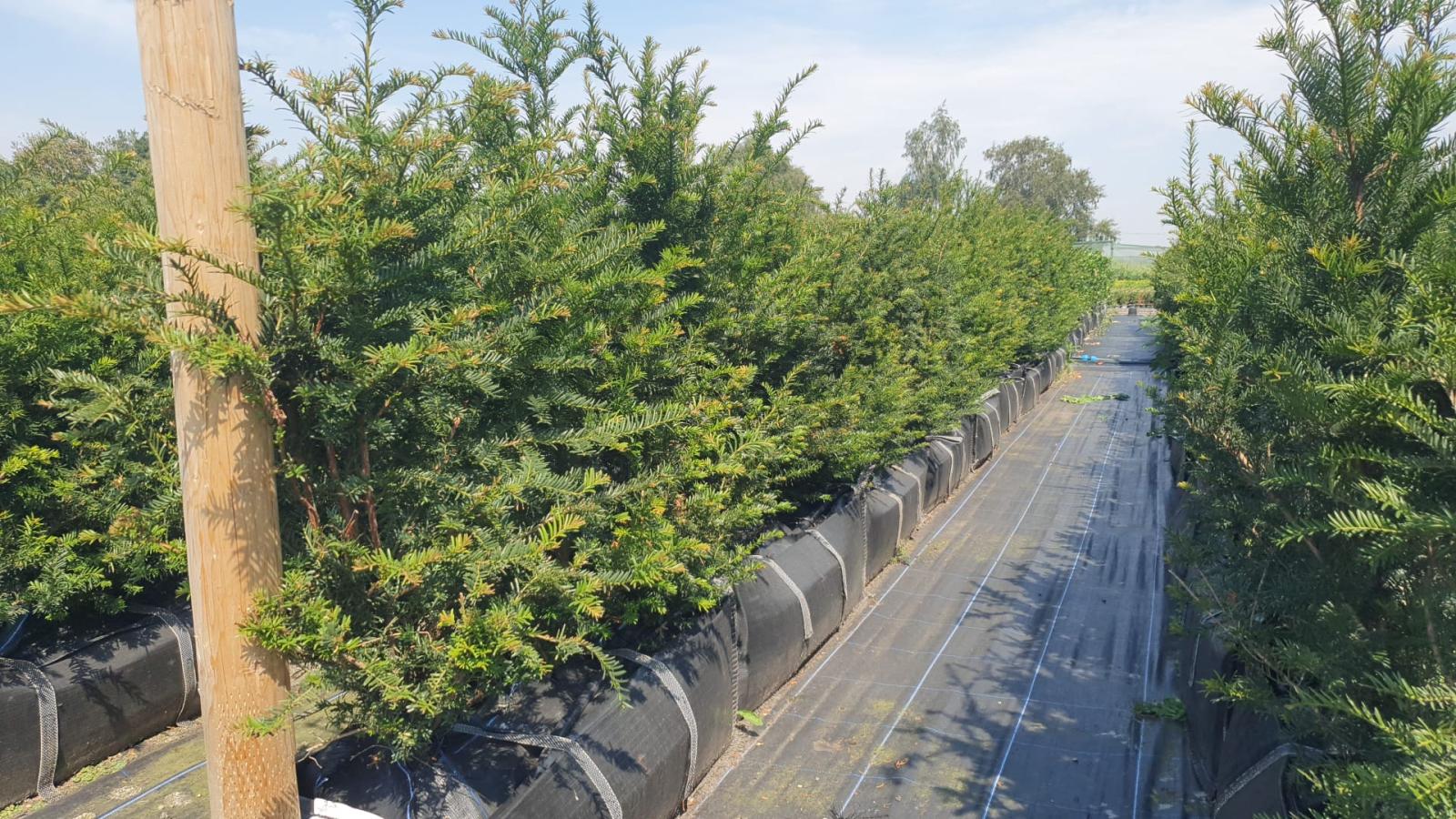
Yew is one of the finest hedging plants for anyone wanting a dense, long-lasting evergreen hedge with a smart, traditional look. It has been used in British gardens for centuries and remains an excellent choice for everything from formal boundaries and topiary to tall privacy screens.
Unlike many conifers, Yew is remarkably tolerant of pruning and can recover from cuts into older wood. It is also hardy, adaptable and capable of thriving in a wide range of positions. Once established, a well-maintained Yew hedge can remain attractive and useful for generations.
For many gardens, the biggest advantage of Yew is that it combines the year-round privacy of an evergreen hedge with the flexibility to shape, reduce, and renovate it over time.
Yew is evergreen
One of the main benefits of a Yew hedge is that it keeps its foliage throughout the year.
This means it provides:
- year-round privacy
- permanent garden structure
- screening in winter as well as summer
- a consistent dark green backdrop for other planting
- shelter throughout the seasons
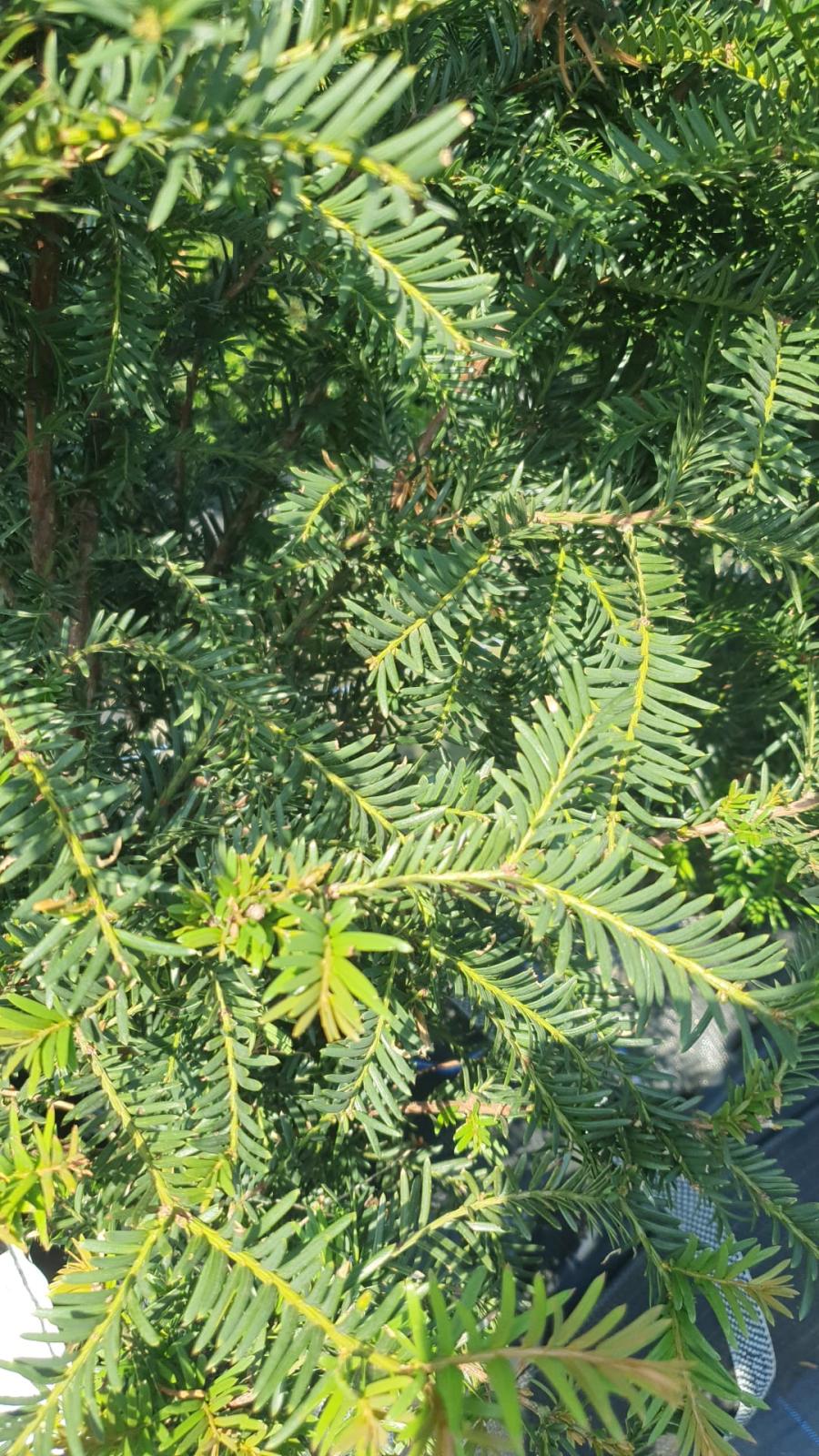
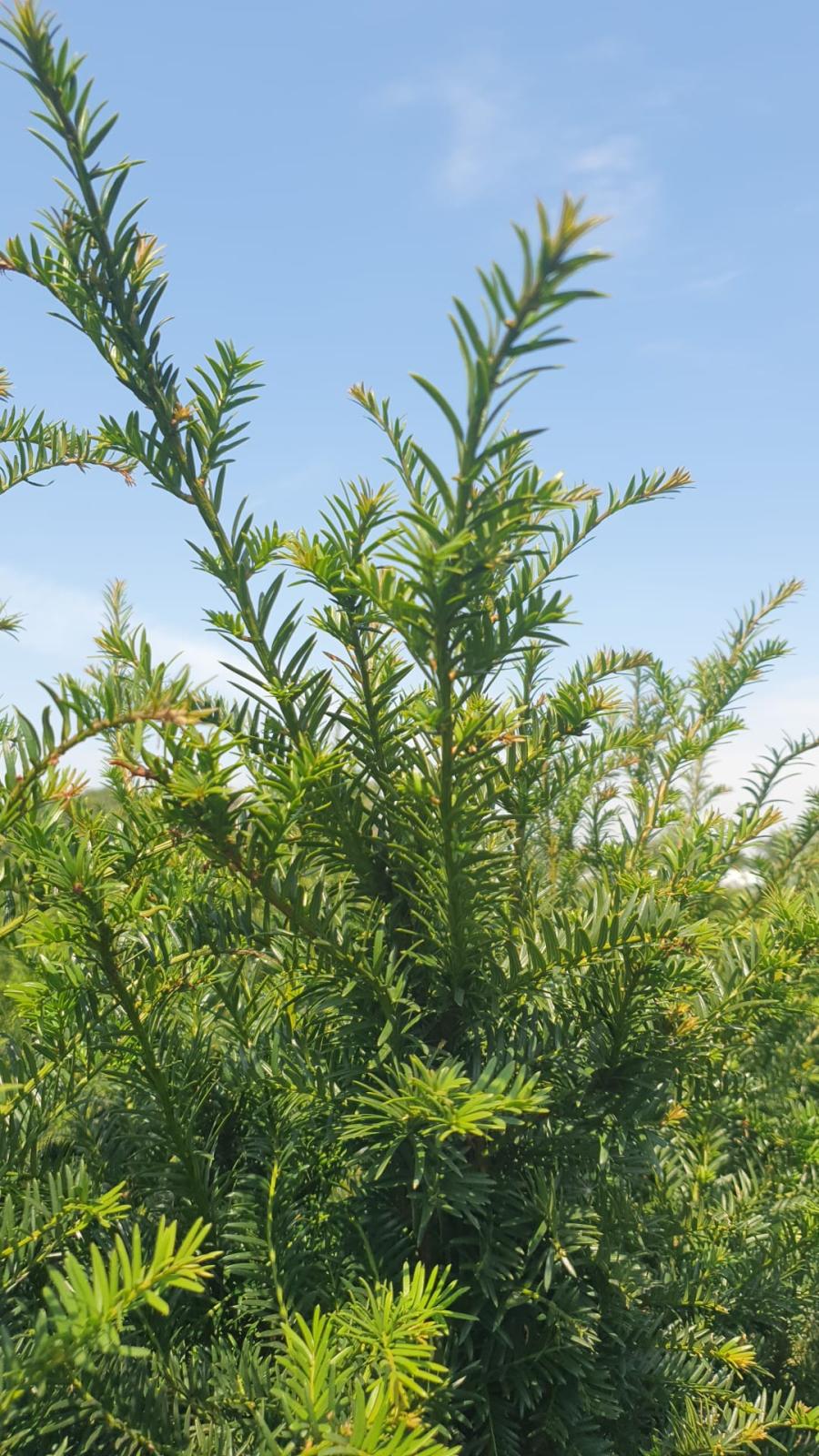
The foliage is made up of fine, dark green needles, creating a very different appearance from broad-leaved evergreen hedges such as Laurel.
Yew tends to look formal and architectural, making it particularly well suited to traditional gardens, period properties and structured planting schemes.
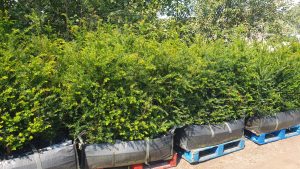
Yew makes a very dense hedge
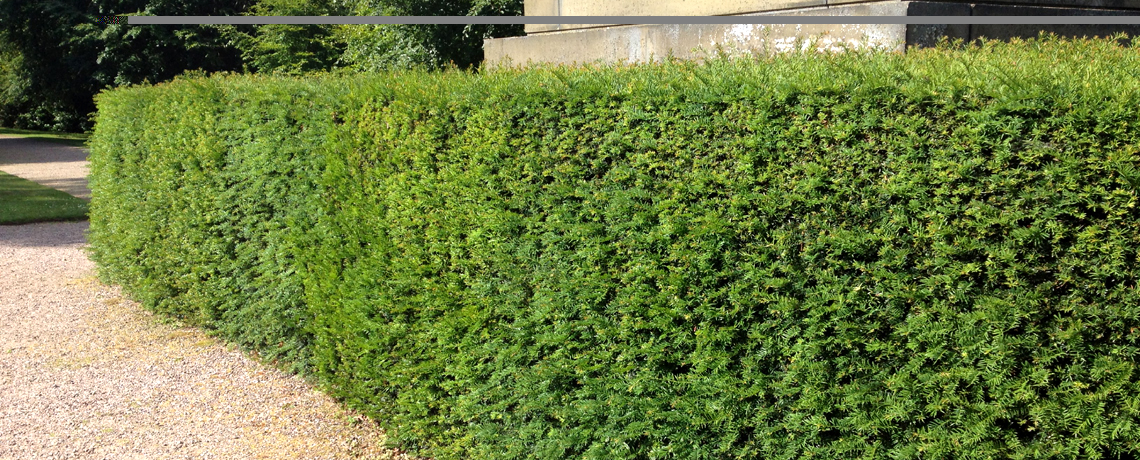
Regularly trimmed Yew develops into an exceptionally dense screen.
Its fine branching structure allows it to create a thick wall of foliage, making it useful for:
- privacy
- dividing areas of a garden
- screening buildings or boundaries
- creating formal garden rooms
- reducing views from neighbouring properties
- providing a visual backdrop to borders and planting
Because the foliage is fine rather than broad, a Yew hedge can be clipped into very crisp lines without looking coarse.
Yew can be kept very formal
Few hedging plants respond as well to formal clipping as Yew.
It is ideal where you want:
- straight sides
- level tops
- defined corners
- geometric shapes
- topiary
- formal garden structures
Regular trimming encourages Yew to become denser and smoother.
This makes it especially useful around:
- entrances
- pathways
- terraces
- formal lawns
- courtyards
- historic or traditional-style properties
However, Yew does not have to be kept rigidly formal. It can also be allowed to grow with a softer, more natural outline if that suits the garden better.
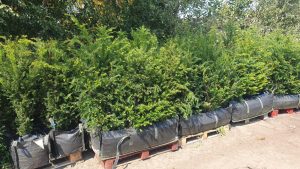
Yew can grow in sun or shade
One of Yew’s biggest practical advantages is its tolerance of different light levels.
It can grow successfully in:
- full sun
- partial shade
- relatively shady positions
This makes it extremely useful in gardens where other evergreen hedges may struggle.
A Yew hedge can work particularly well:
- along north-facing boundaries
- beside buildings
- beneath the lighter canopy of established trees
- where part of the hedge receives more sun than another
- in gardens with changing light conditions
Deep, dry shade beneath large trees can still be challenging because of root competition and lack of moisture, but Yew is generally one of the better evergreen choices for lower-light positions.
Yew is extremely hardy
Yew is exceptionally hardy and is well suited to UK conditions.
It can cope with severe winter temperatures and is much less vulnerable to frost than some other evergreen hedge plants.
This makes it a strong choice for:
- colder inland gardens
- northern parts of the UK
- exposed sites
- frost-prone areas
- gardens at higher elevations
The combination of evergreen foliage and excellent cold hardiness makes Yew particularly useful where you need year-round screening in a difficult climate.
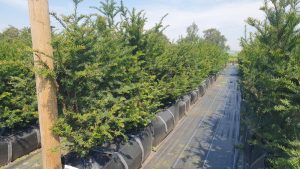
Yew tolerates exposure
Yew can cope with exposed conditions once established.
It can be used for:
- open garden boundaries
- rural gardens
- exposed inland sites
- large properties
- shelter planting
Its dense branching can create a useful windbreak.
Young plants still need watering and careful care while their root systems establish, but mature Yew is a very resilient hedge.
Yew is tolerant of many soil types
Another benefit of Yew is its adaptability.
It can grow in a range of soils, provided drainage is adequate.
Suitable soils can include:
- clay
- loam
- sandy soil
- chalky soil
- acidic soil
- neutral soil
- alkaline soil
This means Yew can be considered for many gardens where soil type would limit other hedging choices.
The main condition we would avoid is persistent waterlogging.
Yew does not like sitting in saturated ground, and prolonged poor drainage can cause serious root problems.
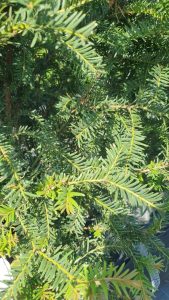
Yew can cope with dry soil once established
An established Yew hedge has good drought tolerance.
This can make it useful in:
- dry gardens
- areas with lighter soils
- mature gardens where root competition is present
- sites that receive less summer rainfall
Newly planted Yew still needs regular watering while the roots establish. Drought tolerance develops with maturity and should not be used as a reason to neglect a young hedge.
Mulching and keeping weeds away from the root zone will help new plants establish more effectively.
Yew is unusual among conifers because it regrows from old wood
This is one of the most important advantages of Yew hedging.
Most conifers do not reliably produce new growth if you cut them back into old, bare wood. Yew is different.
A healthy Yew can regenerate from mature woody stems, which means an old or overgrown hedge can often be reduced considerably and encouraged to grow back.
This gives Yew a major advantage for long-term hedge management.
If a hedge becomes:
- too wide
- too tall
- uneven
- neglected
- thin in places
there is often a realistic opportunity to renovate it rather than replace it.
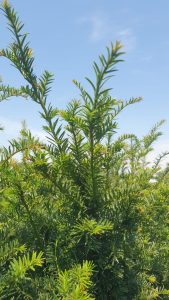
An old Yew hedge can often be renovated
Because Yew responds to hard pruning, even a large, mature hedge can often be brought back under control.
We generally recommend staged renovation where a very large reduction is needed. This may involve reducing the top and sides over several growing seasons so the hedge has time to recover.
For moderate reductions, Yew can often tolerate surprisingly substantial pruning.
This makes it one of the best evergreen hedge plants for a property where the garden may change over time.
A hedge planted today does not have to remain exactly the same width and height forever.
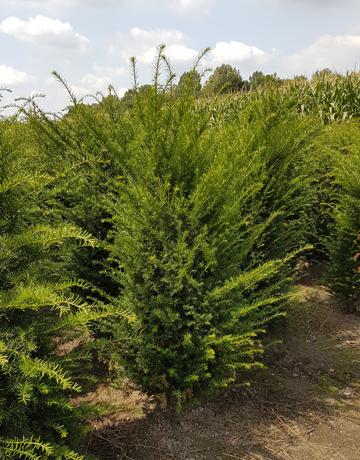
Yew can be maintained at many different heights
Yew is extremely versatile when it comes to finished hedge size.
It can be maintained as:
- a low formal hedge
- a medium boundary
- a privacy screen
- a tall garden division
- a substantial evergreen backdrop
If left completely unpruned, the natural plant can eventually become a large tree, but regular trimming keeps the hedge at almost any practical garden height.
This versatility is particularly useful where you want the same species used at different scales throughout a garden.
Yew is relatively slow growing and easy to control
Yew is often described as slow growing, and compared with very vigorous hedges such as Leylandii or Laurel, it is certainly more controlled.
However, an established Yew hedge can still produce around 20–30cm of growth per year in good conditions.
This rate is useful because it is:
- fast enough to form a substantial hedge
- slow enough to remain manageable
- less likely to overwhelm a small garden quickly
- easier to maintain at a fixed height and width
For anyone who wants a permanent hedge without constant, aggressive cutting, Yew offers a strong balance.
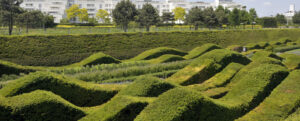
Yew responds well to regular trimming
Once the hedge has reached the desired size, it is straightforward to maintain.
For many established Yew hedges, one good trim each year is sufficient. You can trim formal hedges more often if you need an especially crisp appearance.
Regular trimming:
- encourages dense branching
- maintains a smooth surface
- controls height
- controls width
- prevents the hedge becoming unnecessarily woody or oversized
The relatively moderate growth rate means maintenance is usually predictable.
Yew can create excellent privacy without becoming excessively wide
Because Yew has fine foliage and responds well to clipping, you can maintain it as a relatively narrow hedge compared with some broad-leaved evergreen species.
This can be particularly useful:
- beside paths
- in smaller gardens
- around patios
- along driveways
- where garden width is limited
You still need to allow adequate space for healthy growth, but a carefully maintained Yew hedge can provide excellent screening without occupying an excessive amount of ground.
Yew works well in both traditional and contemporary gardens
Yew is often associated with historic gardens, churchyards and large country houses, but it is equally effective in contemporary landscapes.
In traditional settings, it complements:
- stone
- brick
- gravel
- lawns
- roses
- herbaceous borders
In contemporary gardens, its dark evergreen foliage provides a simple, strong background for:
- architectural plants
- grasses
- modern paving
- pale stone
- minimalist planting
Its ability to be clipped into clean lines makes it especially useful where strong structure is part of the garden design.
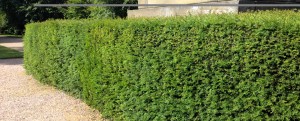
Yew can help define garden spaces
A Yew hedge is excellent for creating structure within a larger garden.
It can be used to:
- divide one area from another
- create garden rooms
- screen utility areas
- frame a lawn
- border a path
- create an entrance
- hide sheds or outbuildings
- provide a backdrop to planting
Because Yew remains evergreen, these divisions remain visible throughout winter when many deciduous plants have lost their leaves.
Yew is long-lived
Yew is famous for its longevity.
Individual Yew trees can survive for hundreds, and in exceptional cases potentially thousands, of years. A well-maintained Yew hedge is therefore not a short-term garden feature.
This makes Yew particularly attractive when establishing:
- permanent boundaries
- formal gardens
- heritage-style planting
- long-term landscape schemes
With sensible pruning and good growing conditions, a Yew hedge can potentially outlast many other features in the garden.
Yew is native to Britain
Common Yew, Taxus baccata, is native to Britain and Ireland.
For gardeners who prefer to include native species in their planting, this gives Yew another advantage over many commonly planted evergreen hedges.
Its long association with the British landscape also means it feels naturally at home around:
- traditional properties
- country gardens
- historic landscapes
- woodland-edge planting
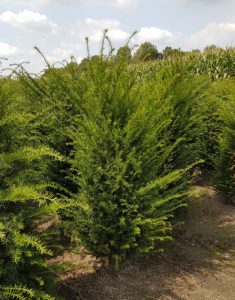
Yew hedges can benefit wildlife
A mature Yew hedge can provide useful shelter and cover for wildlife.
Its dense evergreen structure can offer:
- nesting opportunities for birds
- winter shelter
- protection from predators
- cover for insects and other small garden wildlife
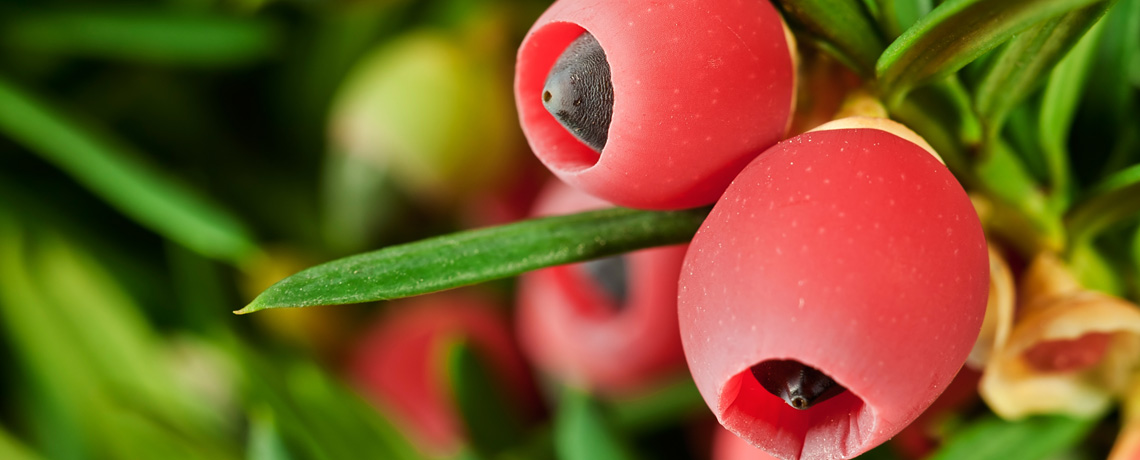
Female Yew plants can also produce distinctive red arils.
As with any hedge, wildlife value depends on how intensively you maintain it. Allowing some areas to remain slightly less formal may increase the shelter it provides.
Always check carefully for active bird nests before trimming.
Yew can help filter wind, noise and views
Dense hedges can provide benefits beyond simple privacy.
A substantial Yew hedge can help:
- soften wind
- filter views
- reduce the visual impact of roads or buildings
- create a feeling of enclosure
- reduce some everyday garden noise
No hedge should be considered a complete soundproof barrier, but dense evergreen planting can help soften the environment and make a garden feel more private.
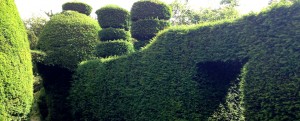
Yew is suitable for topiary
Yew is a classic topiary plant because its small foliage and dense growth respond extremely well to clipping.
It can be shaped into:
- cones
- balls
- columns
- pyramids
- arches
- formal geometric forms
This makes it possible to use Yew hedging and Yew topiary together to create a coordinated garden design.
Is Yew low maintenance?
Yew is relatively easy to maintain once it reaches its required size, especially if you prefer a slightly softer hedge.
A typical established hedge may only need:
- one main trim each year
- occasional removal of damaged branches
- watering during exceptional drought
- mulch or feeding if growth becomes weak
Very formal Yew hedges require more frequent trimming, but this is a design choice rather than a requirement for the health of the plant.
What are the disadvantages of Yew hedging?
Yew has many benefits, but it is important to consider its limitations as well.
It is not the fastest hedge
If immediate screening is the main priority, faster-growing options may reach the required height sooner.
Yew rewards patience. Its slower, denser growth is one reason mature Yew hedges look so good, but it is not the right choice if you expect a small plant to become a two-metre screen almost immediately.
It dislikes waterlogged soil
Poor drainage is one of the biggest risks with Yew.
Planting into persistently saturated ground can result in root decline and disease.

Are all parts of Yew poisonous if eaten?
Yew is highly toxic if ingested; the fleshy red aril is the exception, but the seed inside it remains toxic.
This is particularly important where hedging is accessible to:
- horses
- cattle
- sheep
- other livestock
- pets likely to chew plants
- young children
Yew clippings should never be left where livestock or animals may eat them.
If you’re considering the hedge for a paddock or livestock boundary, we generally recommend a safer alternative.

Who should choose a Yew hedge?
We would particularly recommend considering Yew if you want:
- a permanent evergreen hedge
- year-round privacy
- a formal or elegant appearance
- good performance in shade
- a hedge suitable for colder parts of the UK
- a plant that tolerates clipping extremely well
- a hedge that can potentially be renovated in future
- controlled rather than extremely rapid growth
- a long-lived garden feature
It is especially well suited to anyone willing to wait a little longer for a high-quality finished hedge.
Final thoughts
Yew is one of the most versatile and dependable evergreen hedging plants available. It is hardy, long-lived, tolerant of sun and shade and capable of creating an exceptionally dense, attractive hedge.
Its greatest advantage over many other conifers is its ability to regenerate from old wood. This makes Yew far more forgiving if a mature hedge eventually needs reducing or renovation.
Although it is not the fastest-growing option, its controlled growth makes long-term maintenance easier, and regular clipping produces the dense, smooth finish Yew hedges are known for.
For gardens where longevity, structure, year-round privacy and a high-quality formal appearance matter more than instant growth, Yew remains one of the very best hedging choices.
For more Yew Hedging Advice, see our other Knowledge Base
Frequently asked questions about Yew Hedging Conifers