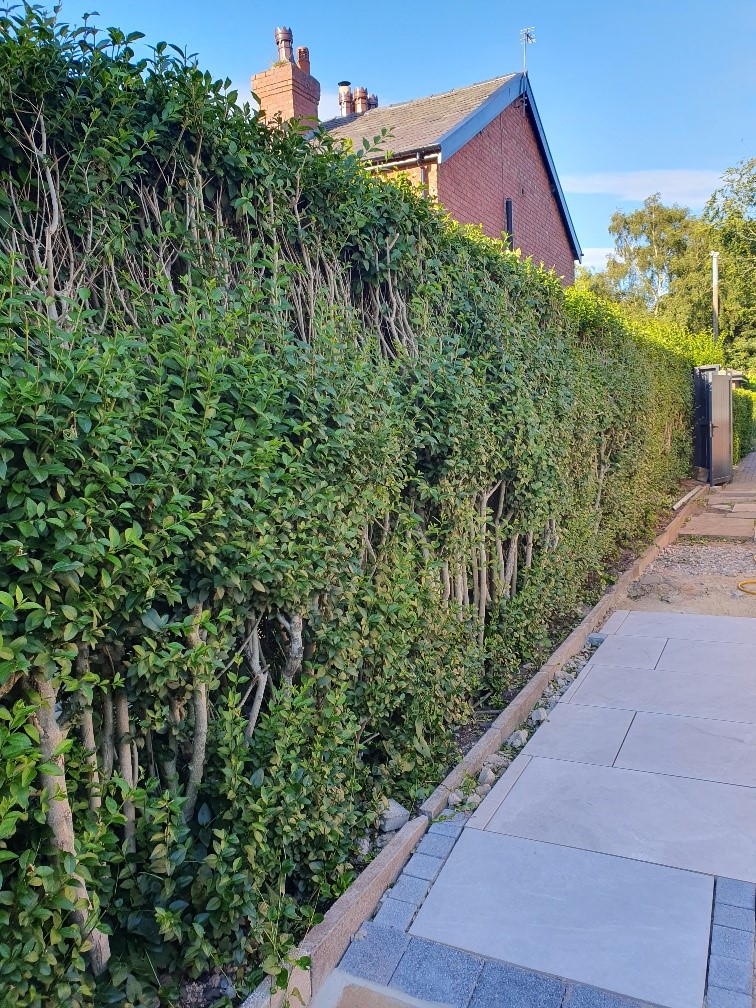
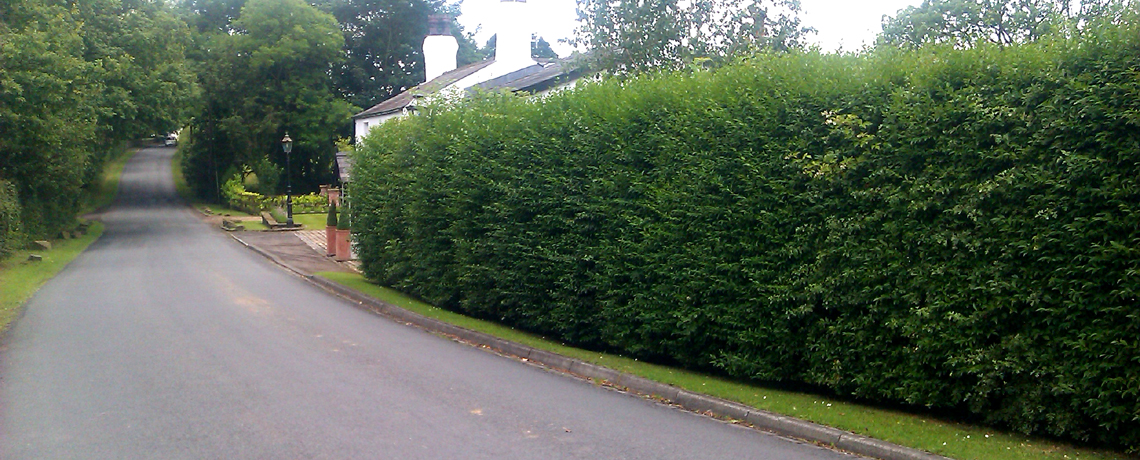
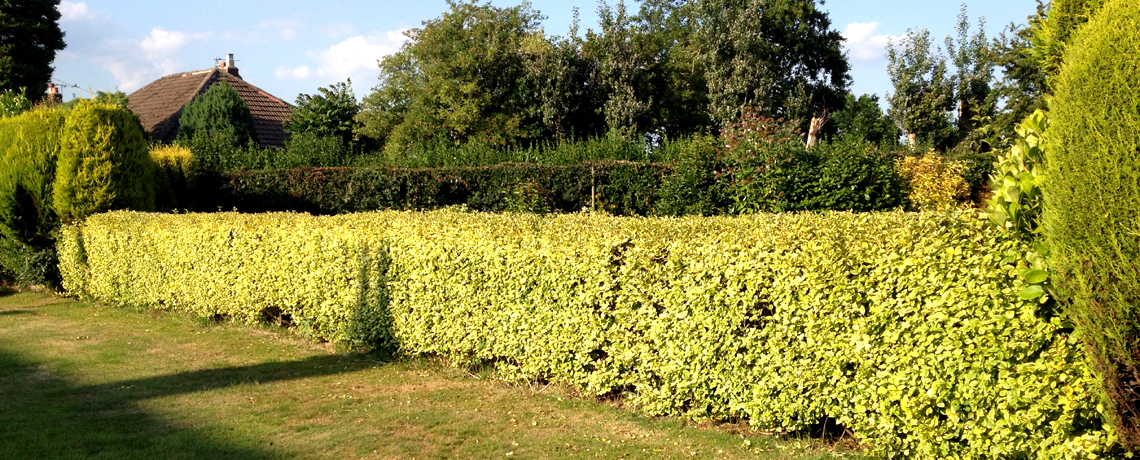
Privet is one of the easiest hedge plants to shape and maintain, which is one of the reasons it has stayed so popular for so long. It responds well to regular clipping, thickens up nicely when managed properly and can be kept anything from neat and formal to softer and more relaxed. For hedge-grown privet, the usual approach is to trim two or three times during the growing season, rather than leaving it for one heavy cut a year.
In our experience, the best privet hedges are not created by occasional harsh cutting. They come from regular, well-timed trimming that encourages bushy growth and keeps the hedge dense from top to bottom. The exact timing depends on whether the hedge is newly planted, well established, or in need of renovation, but the overall aim stays the same: maintain shape, encourage branching and avoid unnecessary stress.
Why privet responds so well to trimming
Privet is naturally well suited to hedge use because it tolerates clipping and quickly produces fresh growth. That makes it a very practical plant if you want a crisp, controlled boundary or a hedge that can be kept in shape without too much trouble. As a hedge plant, privet is commonly pruned multiple times during the growing season, which reflects how well it responds to regular maintenance.
That also means privet can become untidy surprisingly quickly in active growth. Left too long, it may throw out soft, uneven growth that makes the hedge lose its outline. The good news is that regular attention usually keeps it looking smart and encourages a fuller finish over time.
When is the best time to trim a privet hedge?
For an established privet hedge, we usually recommend trimming during the growing season, with two or sometimes three light trims between late spring and late summer, depending on how formal you want the finish to be. Privet is one of the evergreen or semi-evergreen formal hedges typically trimmed two or three times during active growth.
A practical pattern is:
- a first trim in late spring or early summer
- a second trim in mid to late summer
- and, if needed, a final light tidy while there is still enough season left for the hedge to settle before frost
We do not usually recommend leaving trimming too late into autumn, because privet can put on soft new growth after cutting, and that fresh growth is more vulnerable if cold weather arrives soon after.
How often should you trim privet?
How often you trim depends on the style you want.
A formal privet hedge usually needs more frequent clipping to keep its lines sharp. A less formal hedge can often be managed with fewer cuts and a softer finish. Formal hedges may need trimming up to three times a year, while lighter informal hedges can often be maintained with less frequent shaping.
In our experience:
- Formal privet often benefits from two or three trims
- Informal privet may only need one or two trims
- Vigorous growth years may call for an extra tidy-up
- Newly planted hedges should be pruned differently from mature ones
The important thing is not to let a privet hedge run too far out of shape and then try to correct everything in one go.

When to prune a newly planted privet hedge
Newly planted privet should not just be left alone to do its own thing. Early formative pruning is one of the best ways to encourage the hedge to branch out and become dense from the base upwards. Young hedges benefit from formative pruning in the first couple of years after planting to encourage bushy growth and a good framework of branches.
We usually recommend light formative trimming in the first years rather than aiming for height too quickly. That often feels counterintuitive, but it is one of the best ways to avoid a tall hedge that is thin at the bottom.
With young privet, the goal is to:
- encourage branching
- thicken the sides
- create a solid base
- establish the overall line of the hedge
A little early discipline usually produces a much better long-term result.
The best shape for a privet hedge
One of the most common hedge maintenance mistakes is trimming the sides straight up and down or wider at the top than the bottom. We recommend giving privet a slightly tapered profile, with the hedge a little narrower at the top and slightly broader at the base.
This matters because it allows more light to reach the lower growth. When the base is shaded out year after year, the bottom of the hedge can become thin and woody. A slightly sloping side helps keep the whole hedge greener and denser.
In practice, that means:
- wider at the base
- slightly narrower towards the top
- level across the top if a formal finish is wanted
- consistent lines from end to end
How to trim a privet hedge properly
For routine trimming, we recommend removing the current season’s soft growth gradually rather than cutting heavily into older wood each time. Trimming is generally a form of light pruning that removes growth less than a year old.
A good step-by-step approach is:
- Check the hedge first for nesting birds before you begin.
- Set up a guideline if you want a very straight, formal finish.
- Trim the sides first, working evenly from one end to the other.
- Keep the base slightly wider than the top.
- Finish by trimming the top to the required height.
- Clear away clippings so they do not sit in or around the hedge.
When it comes to nesting birds, extra care is important. Dense hedges like privet can provide nest sites, and it is an offence to damage or destroy an active wild bird nest. If birds are active, work should stop.
Hand shears or hedge trimmer?
Both can work well, and the best choice depends on the hedge’s size and the finish you want.
We often suggest:
- hand shears for smaller hedges, detail work and a very tidy finish
- powered hedge trimmers for longer runs where speed matters
- a final hand tidy for formal hedges if you want a sharper look
The key is using sharp, clean tools. A blunt blade tears through growth rather than cutting it cleanly, which can leave the hedge looking rougher and recovering less neatly.
How hard can you cut back privet?
Privet is quite forgiving, which is another reason it is such a useful hedge plant. Routine trimming should mostly deal with young growth, but if a privet hedge has become overgrown, it can often take harder pruning than many evergreen hedges. Evergreen hedges respond better to renovation when pruned in mid-spring, once active growth has begun and frost risk has passed.
In our experience, if the hedge is badly out of shape, it is often better to renovate it in stages rather than trying to force it back to perfection in one cut. That gives the plant more chance to respond well and avoids leaving it looking too harsh.
Harder renovation pruning is best thought of as a separate job from normal maintenance trimming.
Common pruning mistakes with privet
Privet is forgiving, but it still pays to avoid the usual problems. The most common mistakes we see are:
- trimming too late in the season
- letting the hedge get top-heavy
- cutting only the outer shell without managing the shape
- ignoring the base of the hedge
- using blunt tools
- trimming without checking for nesting birds
- trying to correct years of neglect in one aggressive cut
Most of these are easy to avoid with regular maintenance and a clear plan.
Should privet be cut back every year?
Yes, in most gardens privet benefits from regular annual trimming, and usually more than once if a neat finish is wanted. Hedge-grown privet is typically pruned two or three times in the growing season, and regular trimming is what helps keep it dense and within bounds.
If a privet hedge is left untrimmed for too long, it will often become looser, broader and less tidy. It may still be healthy, but it will usually not have the dense, controlled hedge shape most people are after.
Final thoughts
Privet is one of the best hedging plants for routine trimming because it responds so well to regular shaping. In most cases, we recommend trimming an established privet hedge two or three times during the growing season, keeping the hedge slightly narrower at the top than the bottom, and avoiding late cuts that encourage soft growth before frost.
The best results usually come from light, regular maintenance rather than occasional heavy cutting. Stay on top of the shape, encourage good branching from an early stage, and treat renovation as a separate job when needed. Done properly, a privet hedge will stay dense, neat and easy to manage for years.