
When is the best time to trim a laurel hedge?
The best time to trim a laurel hedge usually depends on the type of pruning you are doing and the condition of the hedge. In general, we recommend trimming most established laurel hedges in late spring or early summer, once the main flush of spring growth has started and the risk of hard frost has passed. That timing suits both Cherry Laurel and Portuguese Laurel, and it lines up well with wider pruning guidance for evergreen hedges and laurel species in particular.
For a neat, well-kept hedge, a second light trim in late summer or early autumn can also work well. This is often enough to tidy the shape, control strong summer growth and help the hedge go into winter looking smart without encouraging too much soft late growth.
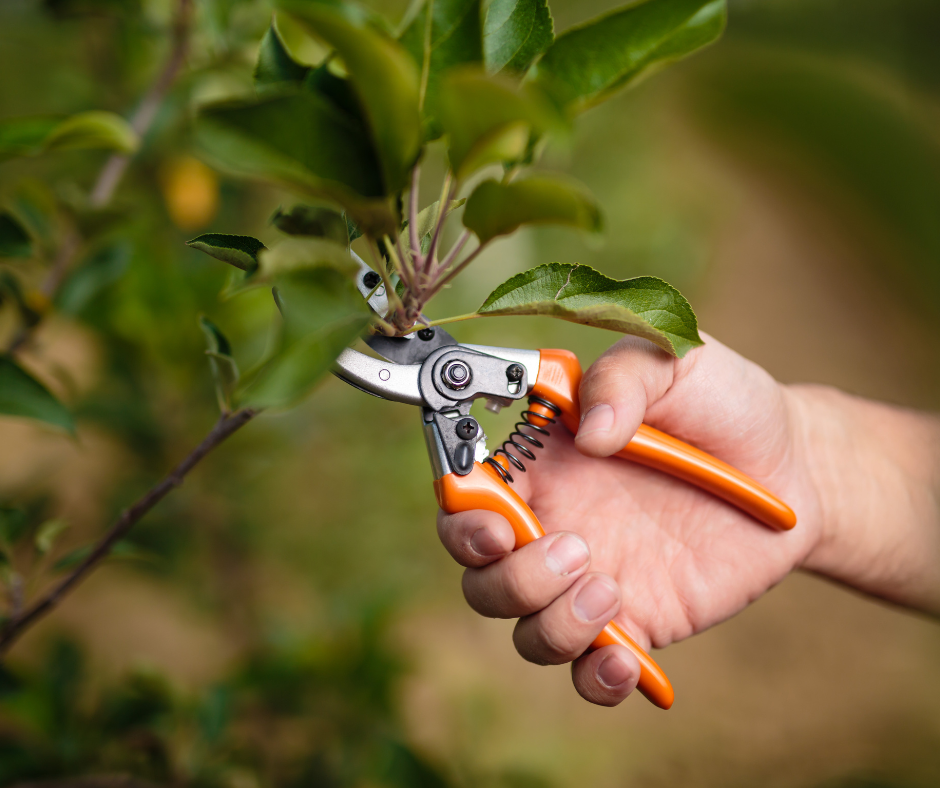
Late Spring and Early Summer Are Usually Best
For most laurel hedges, this is the safest and most reliable time to trim. By late spring or early summer, the plant is actively growing, pruning cuts recover well, and you can shape the hedge without the same frost risk that comes with earlier trimming. For both cherry laurel and Portuguese laurel, hedge pruning is recommended in late spring or early summer, so we usually suggest this as the main trimming window.
This timing also makes sense in practical terms. You can see how the hedge has come through winter, remove any damaged growth and shape it while the plant is ready to respond with fresh new growth.
A Light Trim Later in the Season Can Help
If your hedge is vigorous or you like to keep it looking particularly neat, we often suggest a second, lighter trim later in the season. For Cherry Laurel especially, an early summer trim followed by a tidy-up in September can work well for maintenance. Portuguese Laurel is often a little easier to keep in shape and may only need one proper trim a year, though a light tidy later on can still be useful if needed.
The key here is that this should be a light maintenance trim, not a heavy reduction. By this stage of the year, the aim is usually to neaten the outline rather than push strong new growth.
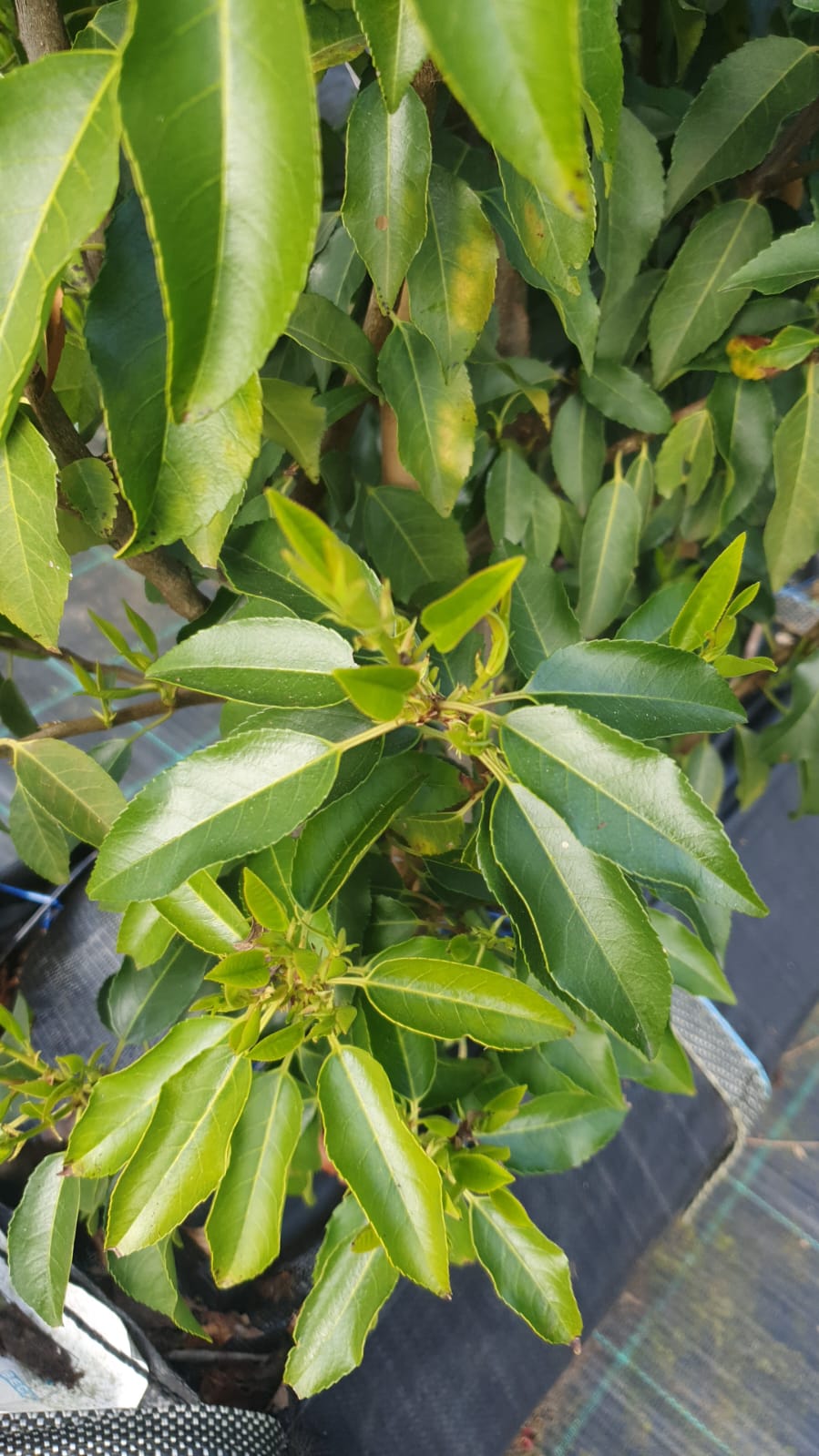
Avoid Heavy Trimming in Late Autumn
We do not usually recommend heavy pruning in late autumn. At that point in the year, the hedge is moving towards winter, and fresh new growth is more vulnerable. A light tidy if needed is one thing, but major shaping or reduction is generally better left until late spring. Current laurel care guidance also advises avoiding heavy pruning in late autumn and saving stronger shaping work until frost risk has passed.
If a branch is broken, damaged or causing a problem, that is different, but routine hard cutting late in the year is best avoided.
What About Trimming in Winter?
Routine trimming in winter is not usually the best approach for laurel hedges. Growth is slower, the hedge is less able to recover quickly and cold weather can make pruning more stressful, especially if frost follows. For everyday shaping, we would usually wait until conditions are milder. General evergreen pruning advice recommends pruning most evergreen shrubs just before growth starts in mid-spring, after the main frost risk has passed.
That said, there is an exception for hard renovation pruning. Hardy evergreen shrubs such as Prunus laurocerasus can be hard-pruned from late February onward, or later in colder areas, if the hedge needs rejuvenation. That is more specialist work than a routine trim, but it is useful to know whether an older hedge needs to be brought back under control.

Read more Winter Hedge Care Advice here
When to Trim a Newly Planted Laurel Hedge
A newly planted laurel hedge should be treated a little differently from a mature one. In the early stages, the aim is not heavy shaping but encouraging the plants to branch well and establish properly. For evergreen hedges generally, formative pruning is usually focused on trimming back straggly side growth in spring rather than carrying out hard cutting too early.
In practice, we recommend letting a newly planted hedge settle in, then carrying out light formative trimming as needed to help it bush out. Heavy pruning too soon can slow establishment rather than improve it.
Cherry Laurel and Portuguese Laurel Timing
Cherry Laurel and Portuguese Laurel are similar in many ways, but the growth habit can affect how often they need trimming. Cherry Laurel is often more vigorous, so it may benefit from one main trim in late spring or early summer and another lighter tidy later in the season if required. Portuguese Laurel is often a little slower and neater by nature, so one proper trim may be enough in many gardens.
That is why we always suggest looking at the actual hedge in front of you rather than following a rigid calendar alone. Growth rate, weather, soil, and the standard you want to maintain all make a difference.
Signs Your Laurel Hedge Is Ready for a Trim
Rather than trimming by date alone, it also helps to watch the hedge itself. A laurel hedge is usually ready for trimming when:
- New growth is making it look untidy
- shoots are sticking out beyond the main shape
- The hedge is becoming too tall or wide for the space
- Winter damage needs tidying out
- You want to encourage a denser, more even finish
The best results usually come from trimming at the right point in the growth cycle, not just because a certain month has arrived.
Final Thoughts
For most laurel hedges, we recommend late spring or early summer for the main trim, with the option of a lighter second trim in late summer or early autumn if needed. That gives the hedge the best chance to recover well, stay dense, and maintain a smart shape throughout the growing season.
The exact timing will always depend on the hedge, the weather and how much cutting is needed, but as a general rule, avoid heavy pruning late in the year and save major shaping for the main growing period. With good timing, laurel responds well and stays healthy, dense and easy to manage.
Related Laurel Hedge Advice