
Laurel Species Guide
Laurel is one of the most versatile groups of evergreen hedging plants, which is one reason it remains so popular in UK gardens. The name “laurel” is often used quite loosely, but in practice it can refer to several different plants with very different habits, leaf shapes and best uses. For hedging, the most commonly grown species are Cherry Laurel (Prunus laurocerasus), Portuguese Laurel (Prunus lusitanica), Bay Laurel (Laurus nobilis) and Spotted Laurel (Aucuba japonica).
If you are choosing a laurel hedge, it helps to understand which species is best suited to your space and what you want the hedge to do. Some are ideal for dense privacy screening, some suit more formal gardens, and some are better used as ornamental evergreen structure rather than a large boundary hedge. In our experience, choosing the right species from the start makes the hedge far easier to manage and much more successful long term.
Cherry Laurel
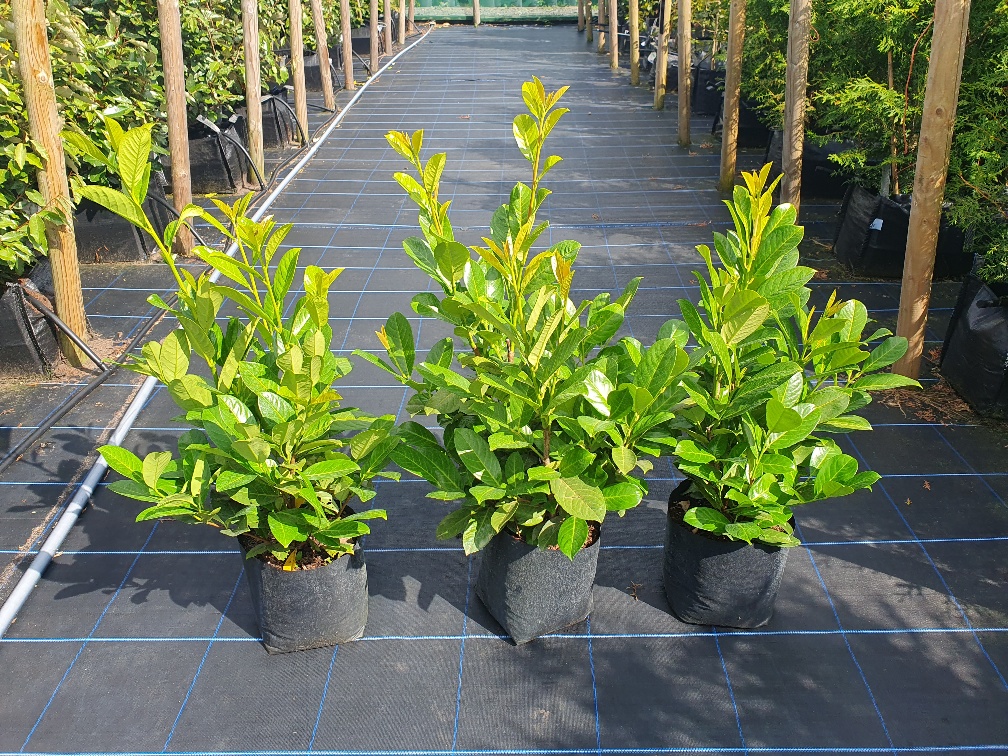
Cherry Laurel, or Prunus laurocerasus, is the laurel species most people think of first. It is one of the most widely used evergreen hedging plants for privacy because it grows into a dense, bushy hedge with large, glossy green leaves. It is particularly effective where the goal is to create a substantial screen that gives year-round cover.
This species is a strong choice for:
- privacy hedging
- boundary screening
- reducing exposure
- creating a bold evergreen backdrop
In our experience, Cherry Laurel works especially well in medium to large gardens where a fuller, broader hedge is not a problem. It gives that classic, lush laurel look and tends to establish itself as a very effective screen.
Portuguese Laurel
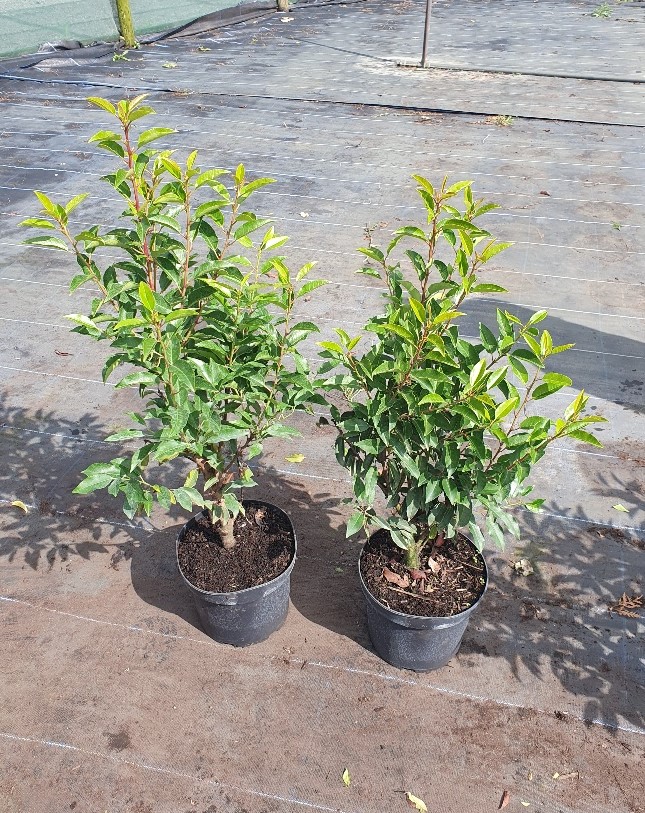
Portuguese Laurel, or Prunus lusitanica, is a more refined species with smaller dark green leaves and attractive maroon-red stems. It is widely valued as an evergreen hedge plant and is often chosen where a smarter, more polished finish is needed. The RHS includes Portuguese Laurel among its recommended large evergreen hedges, and supplier guidance highlights its strong clipped appearance and suitability for formal hedging.
We often recommend Portuguese Laurel when the customer wants:
- evergreen privacy
- a neater and more elegant appearance
- a formal hedge
- smaller foliage than Cherry Laurel
It still creates dense screening, but the overall look is tidier and more architectural.
Bay Laurel
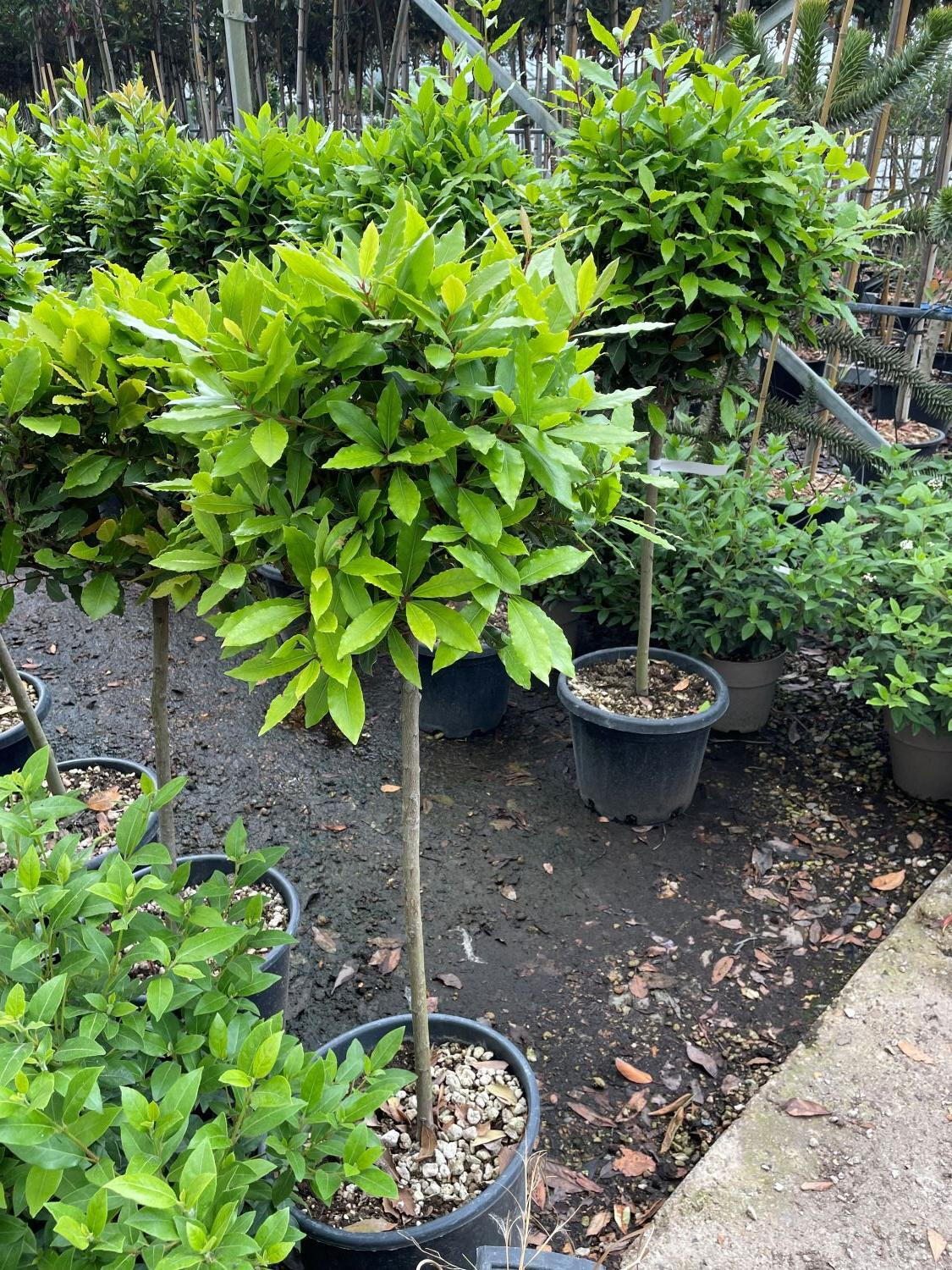
Bay Laurel, or Laurus nobilis, is quite different from the two hedging laurels above. Best known as the culinary bay, it has aromatic, dark green leaves and a naturally more ornamental feel. It can be grown as a hedge, but it is often just as popular for topiary and specimen planting.
We usually see Bay Laurel used where the aim is:
- decorative evergreen structure
- formal clipped hedging
- topiary
- a more Mediterranean garden style
It is not usually the first species we would suggest for a large, fast privacy screen, but it is an excellent choice where style, fragrance and a more decorative finish matter most.
Spotted Laurel
Spotted Laurel, or Aucuba japonica, is another plant commonly grouped under the laurel name. It is very different in character from Cherry Laurel and Portuguese Laurel, mainly because of its ornamental foliage. Many forms have glossy green leaves marked with yellow variegation, making them useful where year-round colour and foliage interest are desired.
In our experience, Spotted Laurel is best suited to:
- ornamental evergreen planting
- smaller boundary spaces
- sheltered gardens
- areas where foliage colour matters more than rapid screening
It is not usually grown as a large formal privacy hedge, as Cherry Laurel is, but it can still be very useful as part of an evergreen garden structure.
Laurel Species for Hedging
If your main aim is to create a hedge, the two most important species are usually Cherry Laurel and Portuguese Laurel. Both are evergreen and strong hedging plants, but they suit slightly different styles. Cherry Laurel is generally the bolder, broader option, while Portuguese Laurel offers a more refined, formal finish. Bay Laurel can also be used as a hedge, but it tends to suit decorative settings more than large-scale screening. Spotted Laurel is usually chosen more for its foliage effect than for traditional tall-hedge use.
That is why we always suggest thinking first about the purpose of the planting. If the hedge is mainly for privacy, the best species may differ from those chosen for formal design, colour, or ornamental interest.
Choosing the Right Laurel Species
When choosing the right laurel species, we recommend thinking about:
- the height and width you want the hedge to reach
- whether you prefer broad or finer foliage
- how formal or natural you want the hedge to look
- whether the plant is mainly for screening or decoration
- How much trimming and maintenance are you happy to do
In our experience, most customers are happiest with their hedge when they choose the species around the end result they want, rather than simply picking the most familiar name.
We have more in-depth advice on choosing a laurel hedge here.
Final Thoughts
Laurel is not just one hedge plant. It is a group of evergreen species with different strengths, appearances and uses. Cherry Laurel is often the go-to choice for dense privacy; Portuguese Laurel is ideal for a more elegant evergreen hedge; Bay Laurel suits formal and ornamental planting; and Spotted Laurel is useful where foliage interest is just as important as structure.
Once you understand the different laurel species, it becomes much easier to choose the right plant for your garden and create a hedge that looks good and performs well for years to come.
Related Laurel Hedge Advice