
Yew Hedge Pruning and trimming advice
Yew is one of the best hedging plants for pruning because it is dense, slow- to moderately growing and unusually tolerant of being cut back hard. Unlike most conifers, Yew can regenerate from old wood, which makes it much easier to control, reshape and renovate if it becomes overgrown.
For most established Yew hedges, we recommend one main trim in late summer, usually around August or September. A very formal hedge may need an additional lighter trim earlier in the growing season, but Yew generally needs less frequent cutting than faster-growing hedges such as Privet, Laurel or Leylandii.
The key is to trim regularly enough to maintain the shape you want, while avoiding unnecessary cutting.
When is the best time to trim a Yew hedge?
For routine maintenance, late summer is usually the best time to trim Yew.
By this point:
- the main flush of growth has developed
- the hedge can be shaped clearly
- growth is slowing naturally
- the finished outline should remain neat through autumn and winter
For most gardens, August or early September is a good window.
If the hedge is particularly formal, a lighter trim in early summer can help maintain a crisp outline before the main late-summer cut.
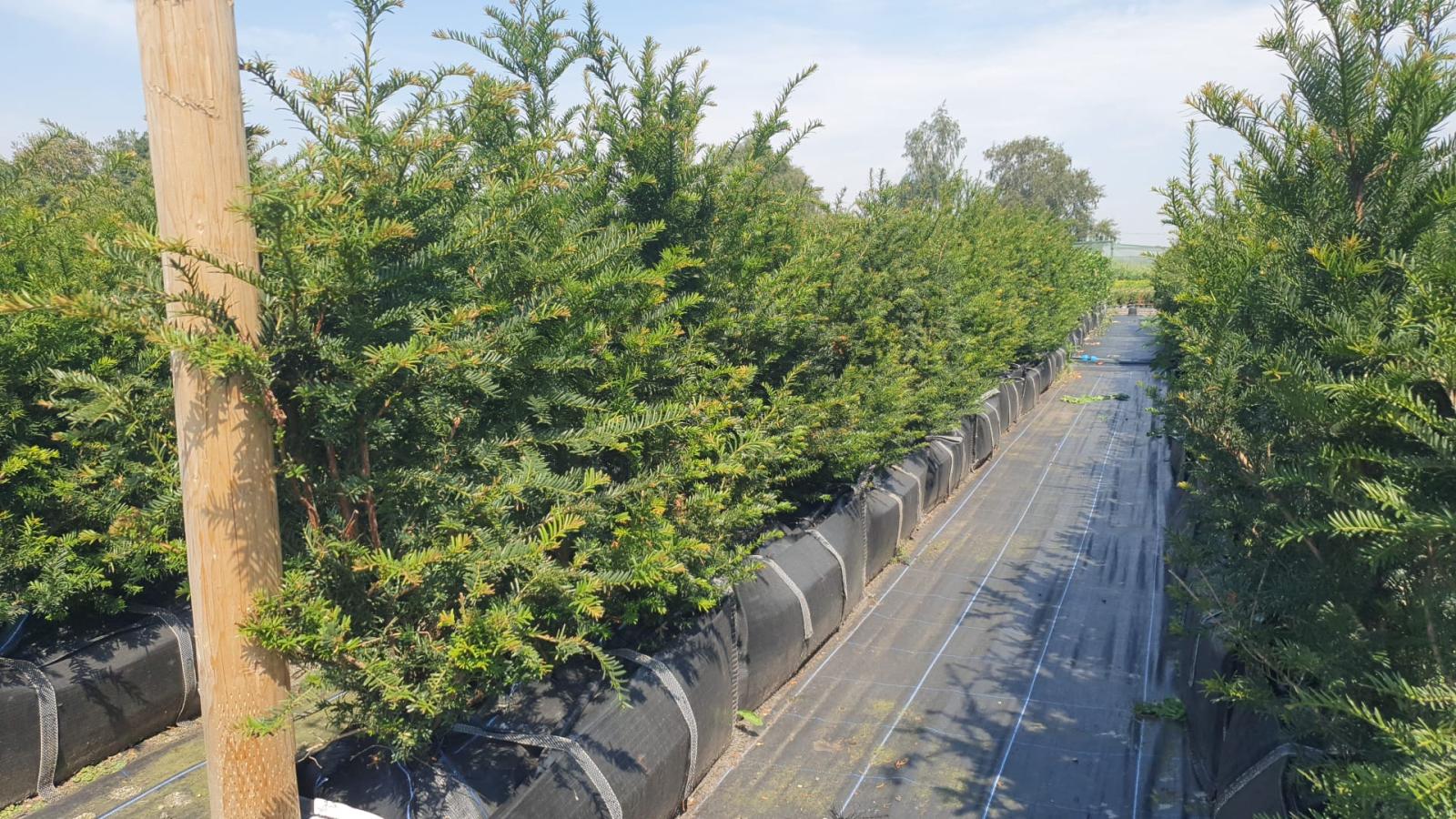
How often should a Yew hedge be trimmed?
Most Yew hedges only need trimming once a year.
This is one of the reasons Yew is so useful for formal hedging. It grows steadily rather than aggressively, so a hedge that is already at its required height and width is relatively easy to keep under control.
A very formal hedge may benefit from:
- a light trim in early summer
- a second trim in late summer
An informal Yew hedge may need even less intervention.
How often you trim depends on:
- the age of the hedge
- how formal you want it to look
- the final height and width
- growing conditions
- how much new growth it produces
- whether the hedge is still being trained
How to trim a Yew hedge
For routine trimming, the aim is to remove the current season’s growth and restore the hedge to its established outline.
A simple approach is:
- Check the hedge thoroughly for active bird nests.
- Decide on the finished height and width.
- Set a string line if you want a straight formal finish.
- Trim the sides first.
- Keep the hedge slightly wider at the base than at the top.
- Trim the top to the required height.
- Remove any awkward or thicker shoots with secateurs.
- Clear away all clippings.
Yew is forgiving, but removing more than necessary during routine maintenance still offers no benefit.

What shape should a Yew hedge be?
We recommend keeping a Yew hedge slightly broader at the base and narrower at the top.
This tapered shape allows more light to reach the lower branches and helps the hedge stay dense from top to bottom.
If the top becomes wider than the base, the lower foliage may become shaded and gradually thin out.
Aim for:
- a broad, solid base
- gently tapered sides
- an even top
- a consistent width along the full length
Formal Yew hedges can be clipped very accurately, but even a softer hedge benefits from good proportions.
When should a newly planted Yew hedge be pruned?
Young Yew should be treated differently from an established hedge.
After planting, we recommend focusing on building density rather than reducing height too early.
For a new hedge:
- remove broken or damaged growth
- lightly shorten long side shoots
- encourage branching lower down
- allow the main leader to continue growing until the hedge approaches the required height
- begin trimming the top once the desired height is nearly reached
This helps create a hedge that is dense from the base rather than tall and thin.
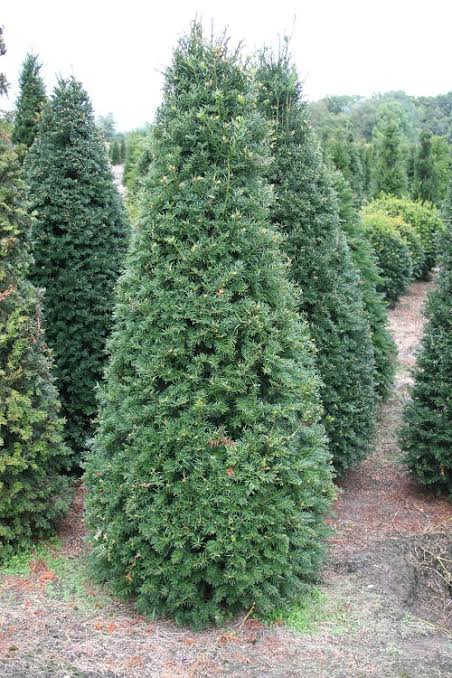
Should the top of a young Yew hedge be cut?
Not immediately.
If the hedge hasn’t reached the height you want, let the main upright shoots keep developing.
Trim the sides lightly to encourage bushy growth, but avoid repeatedly cutting the leading shoots until the hedge nears its intended height.
Once the hedge reaches that level, trimming the top encourages branching and helps create a dense, flat surface.
Can Yew be cut back hard?
Yes, and this is one of Yew’s biggest advantages.
Unlike most conifers, Yew can produce new growth from old, bare wood. This means it can often be reduced significantly if it becomes too tall, too wide or badly neglected.
A mature Yew hedge can often recover from substantial pruning, provided it is otherwise healthy.
That makes Yew much more forgiving than hedges such as Leylandii, which generally will not regrow from old brown wood.
When should you hard prune Yew?
For major renovation, we recommend pruning in spring, once the worst winter weather has passed and the plant is approaching active growth.
Spring renovation gives the hedge a full growing season in which to produce fresh shoots.
Avoid carrying out severe reductions late in autumn or winter.
For very large or stressed hedges, staged pruning is often safer than reducing everything at once.
How to renovate an overgrown Yew hedge
A neglected Yew hedge may become:
- too wide
- too tall
- misshapen
- thin in places
- difficult to maintain
Because Yew responds well to hard pruning, renovation is often possible.
For a large hedge, we suggest:
- Decide on the final height and width.
- Remove dead and damaged branches first.
- Reduce one side if the hedge is extremely wide.
- Allow regrowth to develop.
- Reduce the opposite side later if necessary.
- Lower the top once the hedge is recovering strongly.
- Maintain the new shape with regular trimming.
A less extreme hedge can sometimes be reshaped in one season.
The more severe the reduction, the more patience you’ll need while the hedge fills back in.
How much can you take off a Yew hedge?
For routine trimming, remove only enough new growth to restore the hedge to its previous shape.
For renovation, much more can be removed.
Healthy Yew can tolerate cutting into bare branches, but we still recommend being sensible about very large reductions.
If the hedge is old, weak or growing in poor conditions, staged renovation will reduce stress.
Good aftercare becomes more important after heavier pruning.
Will Yew grow back from brown wood?
Yes.
This is what makes Yew unusual among conifers.
Healthy Yew can produce new shoots from old brown stems and branches, even where there is little visible green foliage left.
Regrowth may not be immediate, especially on very old wood, but this ability makes it possible to:
- narrow an oversized hedge
- lower a tall hedge
- restore bare sections
- correct uneven growth
- renovate neglected plants
This is one of the strongest reasons to choose Yew for a long-term hedge.
How long does Yew take to grow back after hard pruning?
Recovery time depends on:
- the age of the hedge
- how much was removed
- plant health
- soil conditions
- weather
- water availability
- the time of year pruning was carried out
Fresh buds may begin appearing during the following growing season.
A severely cut hedge may take several years to regain a completely dense, finished appearance.
This is normal.
The important thing is to allow new shoots time to develop before repeatedly trimming them back.
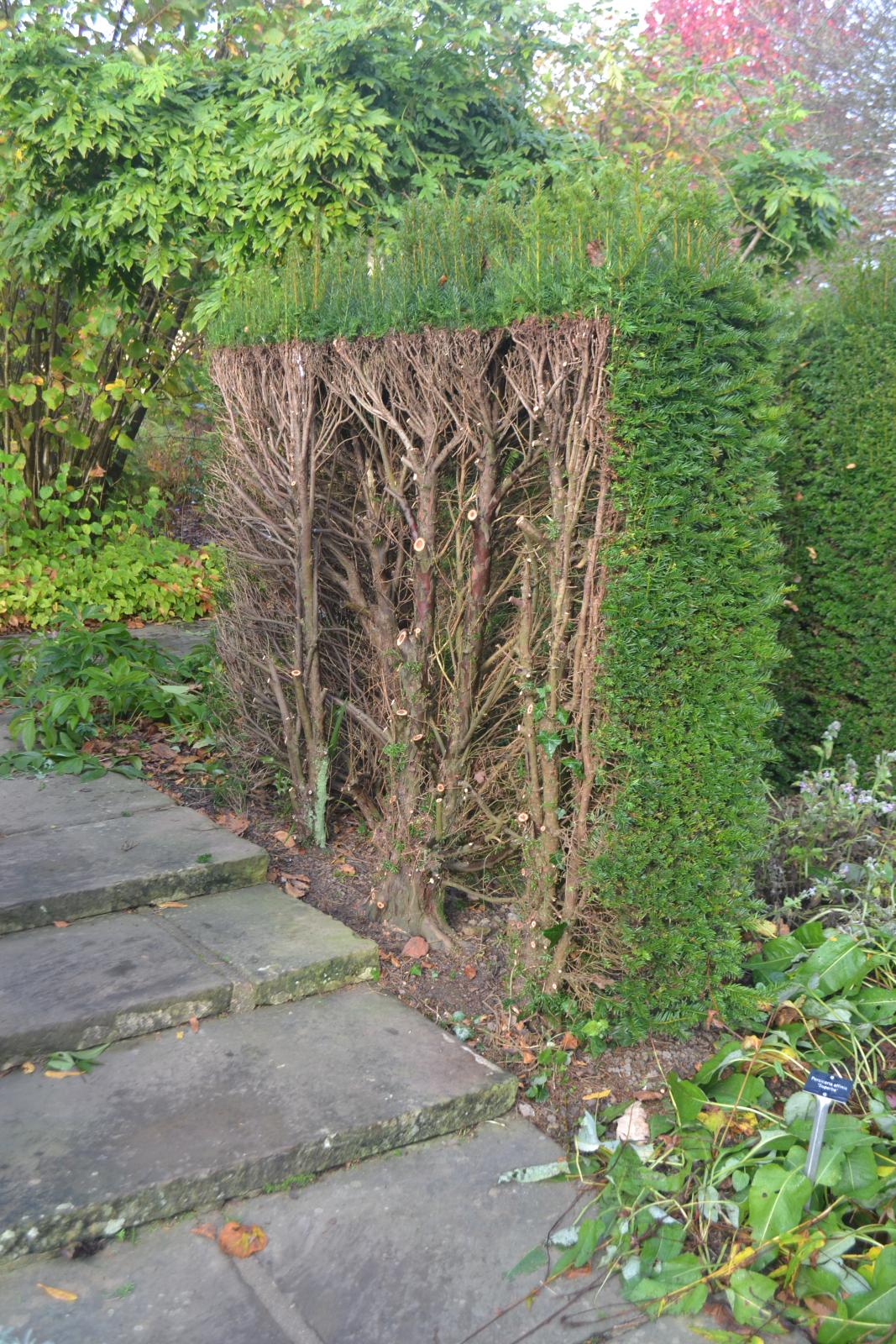
Can a Yew hedge be reduced in height?
Yes.
If a Yew hedge has become too tall, it can usually be lowered successfully.
For a moderate reduction, the top can be cut back to the required level during spring renovation work or routine maintenance.
For a very tall hedge, reduce it gradually if necessary.
Once the new height has been established, regular annual trimming will keep it there.
Can a Yew hedge be made narrower?
Yes.
This is another area where Yew has a major advantage over most conifers.
You can cut back a side quite hard and allow new shoots to develop from the older wood.
For very wide hedges, we often prefer reducing one side at a time. This leaves the opposite side green while the cut side regenerates.
Once the first side has filled back in, the other side can be reduced.
Can you trim Yew with a hedge trimmer?
Yes.
Powered hedge trimmers are ideal for routine maintenance of larger Yew hedges.
They work particularly well because Yew has small, fine foliage.
Use them for:
- maintaining flat sides
- trimming the top
- removing soft annual growth
- maintaining formal lines
For thicker stems, use secateurs, loppers or a pruning saw rather than forcing a hedge trimmer through woody material.
Hand shears or powered trimmers?
Both work well.
Hand shears are useful for:
- small hedges
- fine detail
- topiary
- corners
- correcting minor irregularities
- very formal finishes
Powered trimmers are better for:
- long hedges
- tall hedges
- routine annual maintenance
- larger surfaces
The best tool is the one that allows a clean, controlled cut.
Always keep blades sharp.
Should Yew be trimmed in winter?
Routine winter trimming is unnecessary.
Yew is hardy, but winter is not the best time for shaping.
The hedge grows very little, and fresh cuts will stay exposed longer.
We recommend leaving routine trimming until the growing season and carrying out major renovation in spring.
Emergency removal of broken or dangerous branches is different and can be done when required.
Can you trim Yew in autumn?
A light trim in late summer or very early autumn is usually fine.
This is often the main annual trim.
Avoid severe cutting late in autumn, especially if cold weather is approaching.
Heavy renovation is better left until spring.
How do you keep a Yew hedge thick?
Regular side trimming is one of the best ways to maintain density.
To encourage a thick hedge:
- lightly trim side growth while plants are young
- keep the base wider than the top
- avoid letting the hedge become top-heavy
- trim regularly rather than waiting years between cuts
- maintain good soil moisture while establishing
- keep weeds away from the root zone
- avoid waterlogged soil
If the hedge becomes thin because it has been allowed to grow too wide, Yew can often be cut back and encouraged to refill.
Does feeding help after pruning?
A healthy established Yew does not need heavy feeding simply because it has been trimmed.
After routine pruning, normal care is usually enough.
Following major renovation, we prefer to focus on:
- adequate moisture
- mulch
- weed control
- good drainage
A balanced feed may be useful in poor soil, but excessive fertiliser can produce soft, weak growth and does not compensate for damaged roots or poor drainage.
Watering after pruning
Routine trimming does not normally require extra watering unless conditions are dry.
After heavy renovation, water becomes more important.
We recommend checking the soil regularly, especially during the first growing season after major cutting.
Water deeply if required, but do not keep the soil saturated.
Yew dislikes waterlogged roots.
What should you do with Yew clippings?
Yew clippings are poisonous if eaten and remain poisonous after they have dried.
After trimming:
- collect all cut material
- check the hedge interior for trapped branches
- keep clippings away from children and pets
- never throw clippings into fields or paddocks
- keep them completely away from horses and livestock
- dispose of them securely
This is particularly important where a hedge borders grazing land.
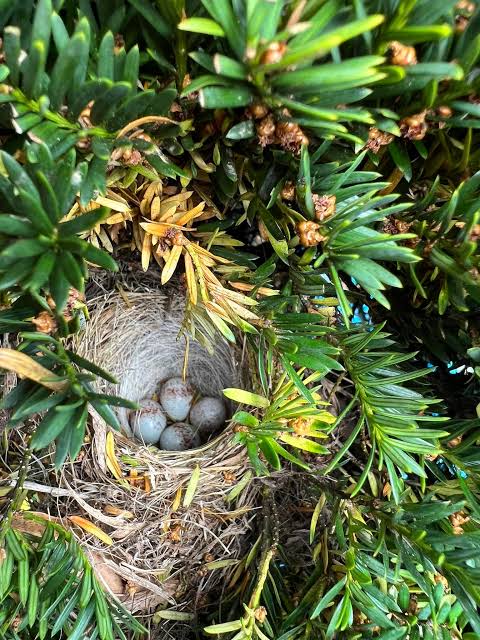
Check for nesting birds before trimming
Yew hedges can provide excellent nesting cover because they are dense and evergreen.
Before trimming, check carefully for active nests.
If you find one, postpone work in that section until the nest is no longer being used.
Do not rely on a quick glance from outside. Dense Yew can hide nests very effectively.
How to maintain a formal Yew hedge
For a crisp formal finish:
- Set a string line for the top.
- Trim the sides evenly.
- Maintain a gentle taper.
- Keep corners sharp.
- Remove protruding shoots.
- Finish the top last.
- Step back regularly to check the overall line.
A formal Yew hedge can become extremely smooth and dense with regular maintenance.
How to maintain an informal Yew hedge
An informal Yew hedge needs less exact shaping.
Instead of creating perfectly flat surfaces:
- selectively shorten long shoots
- remove uneven branches
- maintain the general height
- keep the base healthy
- allow some natural texture
This reduces maintenance and gives a softer appearance while still providing evergreen screening.

Final thoughts
Yew is one of the easiest evergreen hedges to manage over the long term because it responds so well to pruning.
For routine maintenance, one trim in late summer is usually enough, although very formal hedges may benefit from an additional lighter cut earlier in the season.
Encourage young hedges to develop dense side growth before regularly clipping the top. Keep mature hedges slightly wider at the base to prevent lower growth from becoming shaded.
Most importantly, Yew can regenerate from old wood. This makes it possible to renovate hedges that have become too tall, too wide or badly neglected — something that cannot safely be done with most conifers.
With regular, well-timed trimming and sensible aftercare, a Yew hedge can remain dense, attractive and manageable for generations.