
Yew Hedges: Problems, Pests and Diseases
Yew is one of the toughest and longest-lived hedging plants you can grow, and a healthy, established hedge usually gives very little trouble. Even so, problems can occur, particularly when the roots are sitting in wet soil, the hedge is newly planted, or the plants are under stress.
The most important thing with a struggling Yew hedge is to diagnose the cause properly. Browning, thinning and dieback can be caused by pests or disease, but they can also result from poor drainage, drought, root disturbance, incorrect planting depth or weather damage.
In our experience, the condition of the roots and soil is often the first place to look.
Is Yew prone to pests and diseases?
Yew is generally very resilient, but it can occasionally be affected by:
- Phytophthora root rot
- honey fungus
- scale insects
- vine weevil
- gall mites
- tortrix moth caterpillars
Many of these problems are more likely to become serious when the hedge is already stressed.
A well-established Yew growing in well-drained soil is far less likely to suffer badly than one planted in saturated or compacted ground.

Why is my Yew hedge turning brown?
Browning is one of the most common concerns with Yew, but it does not automatically mean the hedge is diseased.
Possible causes include:
- waterlogged roots
- drought stress
- recent planting
- frost or drying winds
- excessive feeding
- root damage
- deep planting
- Phytophthora root disease
- pest damage
The browning pattern usually gives useful clues.
If one whole plant within a hedge is turning brown while its neighbours remain healthy, we would investigate the root zone first. If the outer foliage is scorched evenly, weather or drought may be more likely. If only small sections or individual shoots are affected, a local pest or physical problem may be responsible.

Phytophthora root rot
Phytophthora is one of the more serious diseases that can affect Yew. It is a group of fungus-like organisms that attack roots, particularly in wet or poorly drained soil.
Affected roots can no longer supply the foliage properly, so the hedge may look drought-stressed even when the ground is wet.
Signs can include:
- dull or yellowing foliage
- gradual browning
- wilting
- weak growth
- individual plants dying within the hedge
- brown or blackened roots
- dark tissue around the lower stem
- decline following prolonged wet weather
What should you do if you suspect Phytophthora?
Start by checking drainage.
If the ground stays wet for long periods, simply feeding or watering the hedge will not solve the problem.
We recommend:
- stopping unnecessary watering
- improving drainage where practical
- removing dead or severely affected plants
- clearing infected root material
- avoiding movement of contaminated soil
- cleaning tools after working around diseased roots
- correcting planting depth if the stem base has been buried
Severely damaged Yew may not recover once a large proportion of the roots has been lost.
Before replanting, deal with the drainage issue first.

Waterlogging
Poor drainage is one of the most common causes of serious Yew problems.
Yew can grow in many soil types, but it does not like sitting in saturated ground.
When roots remain waterlogged, they lose access to oxygen, which can lead to root death and increase the risk of root disease.
Signs of waterlogging include:
- yellow or brown foliage
- wilting despite wet soil
- slow or weak growth
- dieback
- soft or discoloured roots
- individual plants collapsing after heavy rainfall
If a planting hole fills with water and stays full for a long time, the location may need drainage improvement before planting Yew.
Honey fungus
Honey fungus can occasionally affect Yew, although it is not one of the most common Yew problems.
This disease attacks roots and woody tissue and may cause a gradual decline or sudden death.
Possible signs include:
- branches dying back
- foliage becoming pale or sparse
- white fungal growth beneath bark
- black bootlace-like strands around roots
- cracking bark around the lower stem
- honey-coloured mushrooms near affected roots or stumps
Mushrooms are not always present, so their absence does not rule out honey fungus.
What should you do about honey fungus?
Where honey fungus is confirmed, remove affected plants and as much infected root and stump material as reasonably possible.
Avoid leaving buried dead wood around the site, as this can allow the fungus to persist.
Before replacing the hedge, inspect the surrounding area carefully and consider whether another species would be more suitable.

Scale insects on Yew
Scale insects are sap-feeding pests that can occur on Yew.
They attach themselves to stems and foliage beneath small protective coverings, which can make them look more like tiny bumps than insects.
Signs may include:
- brown or pale raised scales on stems
- sticky honeydew
- black sooty mould
- yellowing foliage
- weakened growth
- localised thinning
Light infestations are not usually a serious threat to an established Yew hedge.
How to manage scale insects
We recommend inspecting the inner branches as well as the outer foliage because sheltered growth can hide an infestation.
Where the problem is localised:
- prune out badly affected shoots
- remove heavily infested material
- improve airflow
- avoid excessive high-nitrogen feeding
- monitor new growth
A healthy hedge can often tolerate small numbers without significant damage.

Vine weevil
Vine weevil most often affects young Yew plants, container-grown plants, or recently planted hedging.
Adult weevils chew characteristic notches along leaf edges, but larvae are more damaging because they feed on roots.
Signs can include:
- notched foliage
- poor establishment
- wilting
- loose plants
- sudden decline
- reduced or damaged roots
- creamy white grubs with brown heads around the root ball
Established Yew in open ground is usually less vulnerable than plants grown in containers.
If a recently planted Yew dies unexpectedly, it is worth checking the root system.

Gall mites
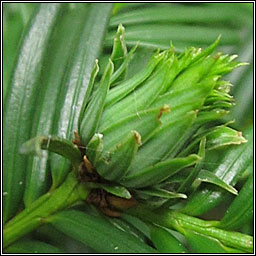
Gall mites are microscopic pests that can distort buds and new growth.
Damage may appear as:
- distorted shoot tips
- swollen buds
- abnormal growth
- uneven foliage
- reduced shoot development
Minor infestations are usually cosmetic rather than life-threatening.
Where damage is limited, we suggest pruning out badly affected growth and monitoring the hedge.
A strong, established hedge will often continue growing normally despite small amounts of mite damage.
Tortrix moth caterpillars
Tortrix moth caterpillars may occasionally feed on Yew foliage.
The caterpillars often roll or web leaves together to create shelter while they feed.
Signs can include:
- webbed foliage
- rolled needles or shoots
- patches of chewed foliage
- small caterpillars hidden inside webbed sections
Light damage is rarely serious on a mature hedge.
Remove obvious webbed growth where practical and monitor the surrounding hedge.
Browning after planting
Recently planted Yew can sometimes turn brown even when no disease is present.
This can happen because the roots have been disturbed and cannot yet fully support the foliage.
New plants are particularly vulnerable to:
- drying out
- wind
- poor soil contact
- air pockets around roots
- planting too deeply
- inconsistent watering
- waterlogging
The first year is critical.
We recommend keeping the root zone evenly moist but not saturated, maintaining a clear, weed-free strip and applying mulch to help reduce moisture loss.
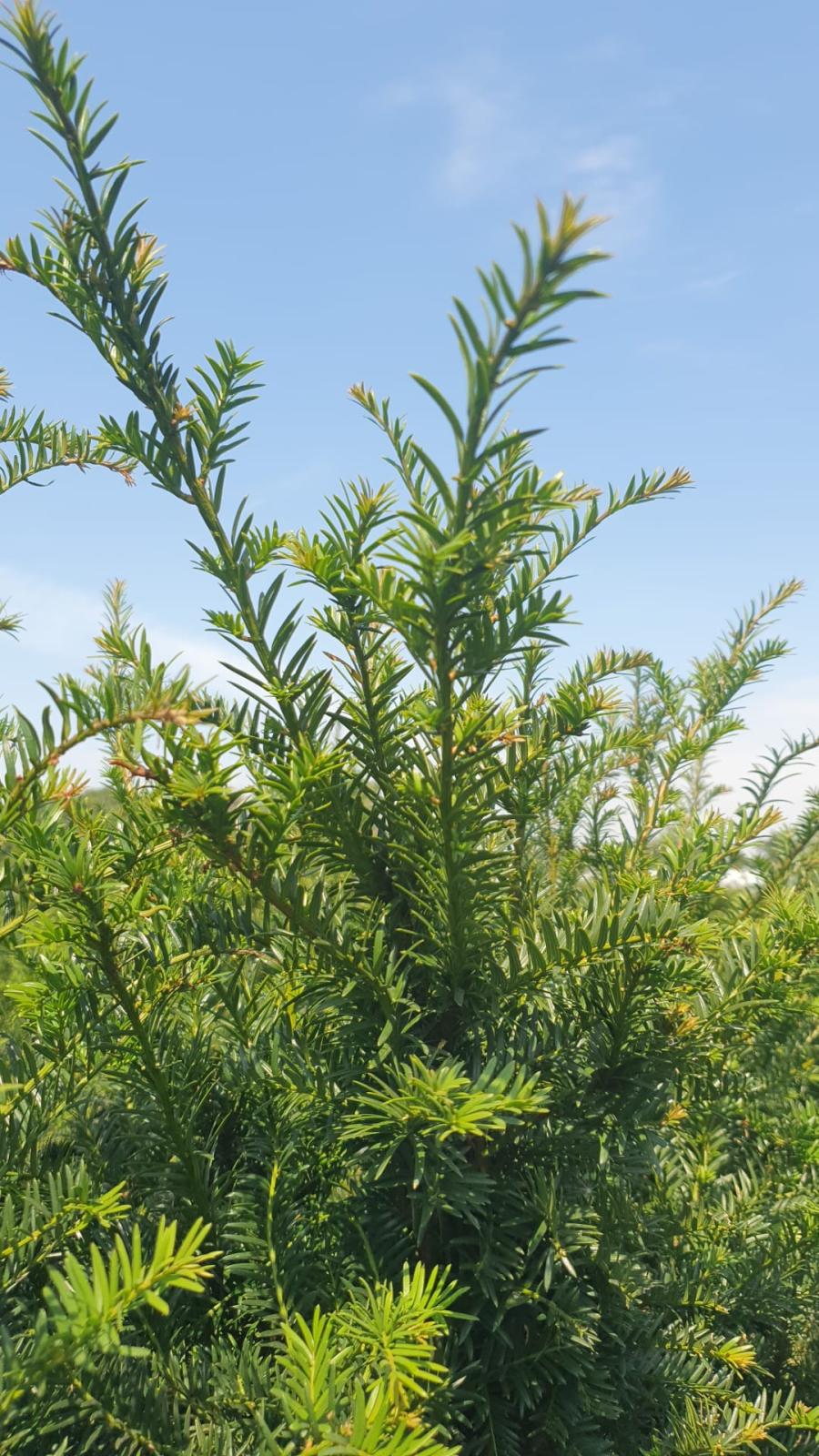
Is my Yew hedge too dry?
Although established Yew is fairly drought-tolerant, newly planted plants still need regular watering.
Signs of drought stress include:
- dull foliage
- browning at the tips
- dry, brittle needles
- reduced growth
- leaf drop
- dieback on newly planted specimens
Water deeply rather than applying small amounts frequently.
The goal is to wet the entire root zone.
Grass and weeds can compete strongly for moisture, so keep the base of young hedges clear.
Can frost damage Yew?
Yew is extremely hardy, so frost damage is uncommon on established plants.
However, newly planted Yew or very soft new growth can sometimes be affected by severe weather.
Cold drying winds may also cause browning, particularly where roots are frozen or dry.
If damage appears after winter:
- wait until spring growth begins
- identify genuinely dead stems
- prune back to healthy growth
- avoid heavy feeding
- check the soil is not waterlogged
Yew recovers well from pruning, so damaged sections can often be restored.
Why is my Yew hedge yellow?
Yellow foliage can have several causes.
Possible reasons include:
- waterlogging
- nutrient imbalance
- drought
- root damage
- planting stress
- natural ageing of older needles
- poor soil structure
- root disease
A small amount of older foliage yellowing and dropping is normal.
Widespread yellowing across the hedge deserves closer investigation.
Before feeding, check soil moisture and drainage. Applying fertiliser to damaged or waterlogged roots can make matters worse.

Why is one Yew plant dying while the rest are healthy?
When one plant within a hedge declines, but the rest look healthy, the cause is often local rather than a disease affecting the entire hedge.
Check for:
- a wet pocket in the soil
- buried rubble
- compacted ground
- damaged roots
- vine weevil larvae
- a dried-out root ball
- deep planting
- accidental chemical damage
- competition from nearby roots
Dig carefully around the affected plant and compare the soil conditions with the healthy plants beside it.
Replacing the plant without correcting the underlying issue may simply lead to another failure.
Brown patches inside a Yew hedge
Brown growth inside an otherwise healthy Yew hedge can sometimes be perfectly normal.
Dense evergreen hedges naturally shade some of their inner foliage. Older needles that receive very little light may brown and fall.
This is usually not a problem if:
- the outer hedge remains green
- new growth is healthy
- there is no progressive dieback
- stems remain alive
- the problem is limited to deeply shaded interior growth
If browning begins spreading from the inside outward, investigate root health and drainage.
Can over-pruning damage Yew?
Yew is unusual among conifers because it can regrow from old wood, so it tolerates harder pruning better than most.
However, repeatedly stressing a weak or recently planted hedge can still cause problems.
Avoid:
- severe pruning immediately after planting
- repeated heavy cuts during drought
- hard pruning late in the season
- removing excessive foliage from already stressed plants
Healthy mature Yew can recover from substantial renovation, but timing and aftercare still matter.
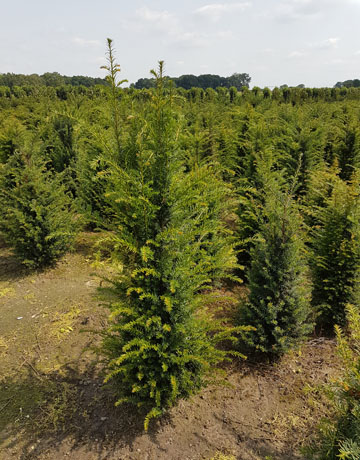
What does a healthy Yew hedge look like?
A healthy Yew hedge should generally have:
- dense dark green foliage
- fresh lighter green new growth
- firm stems
- even growth across the hedge
- good coverage from top to bottom
- no significant dieback
- no persistent yellowing
- no soft or rotten roots
Remember that some variation in colour is normal, particularly as fresh growth develops.
How to prevent Yew hedge problems
The most effective way to avoid problems is to provide the right conditions from the beginning.
We recommend:
- planting in free-draining soil
- avoiding waterlogged positions
- preparing the full hedge line thoroughly
- watering consistently during establishment
- keeping weeds and grass away from the base
- mulching without covering the stems
- trimming at the right time
- avoiding excessive feeding
- checking young plants regularly
- cleaning tools after cutting diseased material
- investigating declining plants early
Most serious problems become harder to solve once large areas of root or stem tissue have already died.
Should diseased Yew clippings be composted?
You can compost healthy Yew trimmings in a secure system, although they are woody and may take time to break down.
Remember that Yew remains poisonous after cutting, so clippings must be kept completely away from livestock and pets.
If the hedge is affected by:
- suspected root disease
- honey fungus
- extensive unexplained dieback
we recommend keeping the affected material out of a basic garden compost heap and disposing of it appropriately.
Do not move infected roots or soil around the garden unnecessarily.
When should a Yew plant be removed?
Yew is remarkably capable of recovery, so removal should not be the first response to every brown branch.
We would consider removal where:
- the root system is extensively rotted
- the main stem is dead at the base
- serious root disease has been confirmed
- the whole plant has turned brown, and no living tissue remains
- dieback continues despite correcting the growing conditions
- The plant is unstable because the roots have failed
Carefully scratch a small section of bark before assuming a branch is dead. Green tissue underneath indicates that the stem is still alive.

When should you seek further help?
A more detailed diagnosis is worthwhile when:
- several plants are dying in sequence
- browning is spreading rapidly
- the soil is consistently wet
- black root-like strands or fungal material are visible
- plants wilt despite wet soil
- new plants repeatedly die in the same position
- the cause is unclear after checking roots and growing conditions
Photographs of the whole hedge, affected foliage, stem bases, roots and soil conditions are far more useful for diagnosis than a close-up of a single brown needle.
Final thoughts
Yew is generally one of the most reliable and resilient evergreen hedging plants, and serious pest or disease problems are relatively uncommon when it is planted in the right conditions.
The biggest threat is usually poor drainage. Waterlogged roots can weaken the hedge and increase the risk of Phytophthora root disease. Scale insects, vine weevil, gall mites, and tortrix moth may occasionally cause problems, while honey fungus is less common but more serious.
Before treating a Yew hedge for pests or disease, always check the basics first. Soil moisture, drainage, planting depth and establishment stress can all create symptoms that look like infection.
A well-planted Yew hedge in free-draining soil is extremely resilient and, thanks to its unusual ability to regenerate from old wood, even damaged or neglected plants can often be restored successfully.